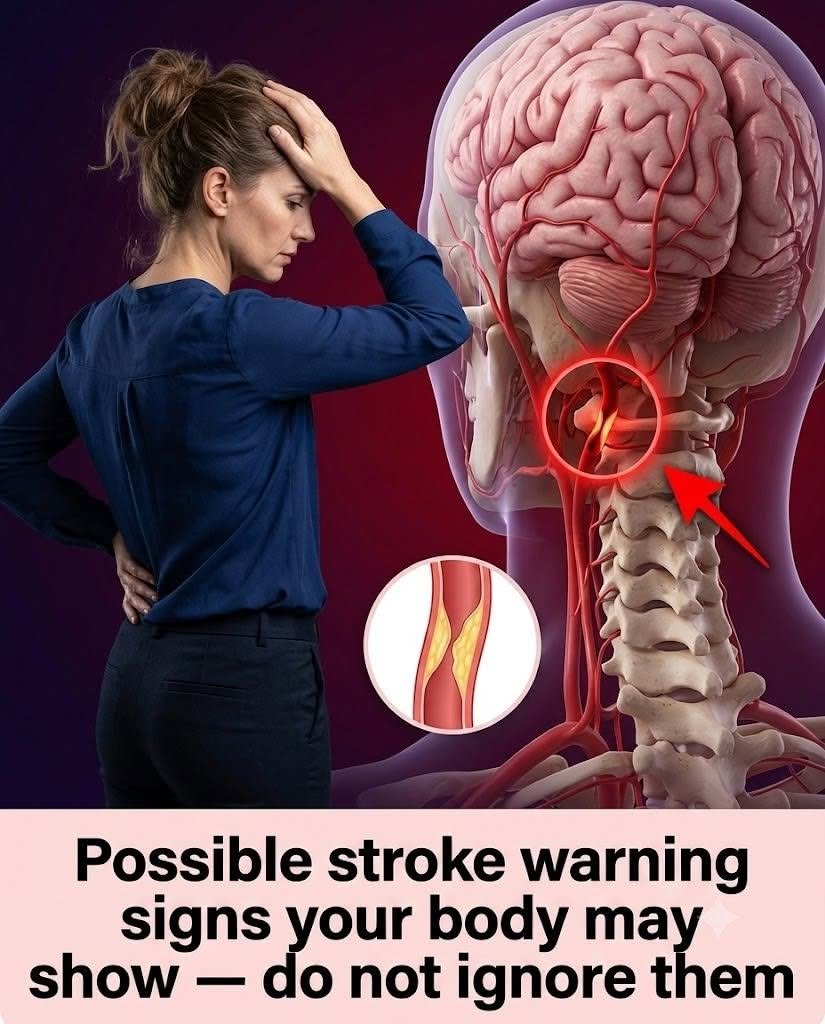
Unlike clickbait wellness trends or exaggerated food hacks, recognizing the warning signs of a stroke is a matter of critical, life-saving medical reality. When a stroke occurs, blood flow to a part of the brain is interrupted or reduced, depriving brain tissue of oxygen and nutrients. Every minute counts—rapid medical intervention can drastically reduce long-term disability and save lives.
Medical organizations and neurologists emphasize clear, recognizable red flags rather than confusing lists of obscure symptoms.
The Core Warning Signs: Remember the F.A.S.T. Acronym
The easiest and most reliable way to spot the most common signs of a stroke relies on the globally recognized FAST test:
-
F – Face Drooping: Does one side of the face droop, or is it numb? Ask the person to smile to check if the smile is uneven.
-
A – Arm Weakness: Is one arm weak or numb? Ask the person to raise both arms. Does one drift downward?
-
S – Speech Difficulty: Is their speech slurred? Are they unable to speak, or hard to understand? Ask them to repeat a simple sentence (e.g., “The sky is blue”) to check for coherence.
-
T – Time to Call Emergency Services: If you observe any of these signs—even if they go away—call emergency services immediately. Note the exact time symptoms first appeared, as this window dictates emergency treatment options.
Additional Critical Warning Signs to Watch For
While the FAST acronym covers the most frequent presentations, a stroke can affect various parts of the brain, leading to other sudden symptoms:
-
5. Sudden Confusion: Difficulty understanding speech, sudden disorientation, or trouble comprehending simple concepts.
-
6. Sudden Trouble Seeing in One or Both Eyes: A sudden darkening, blurring, or double vision in one or both visual fields.
-
7. Sudden Trouble Walking, Dizziness, or Loss of Balance: A sudden loss of coordination, unsteadiness, or a feeling of spinning (vertigo) paired with other neurological signs.
-
8. Sudden Severe Headache: An abrupt, blinding, “thunderclap” headache with no known cause, which can indicate a hemorrhagic stroke (bleeding in the brain).
-
9. Sudden Numbness or Weakness on One Side: Paralysis or a heavy, numb sensation affecting an entire arm, leg, or one side of the body.
-
10. Sudden Memory or Cognitive Lapses: An abrupt, unexplained difficulty processing thoughts or communicating.
💡 The Big Takeaway
If you or someone nearby experiences a sudden onset of these symptoms, do not wait to see if they pass, and do not drive yourself to the hospital. Call emergency services immediately. Time lost is brain lost, and prompt medical action is the single most powerful tool against a stroke.
