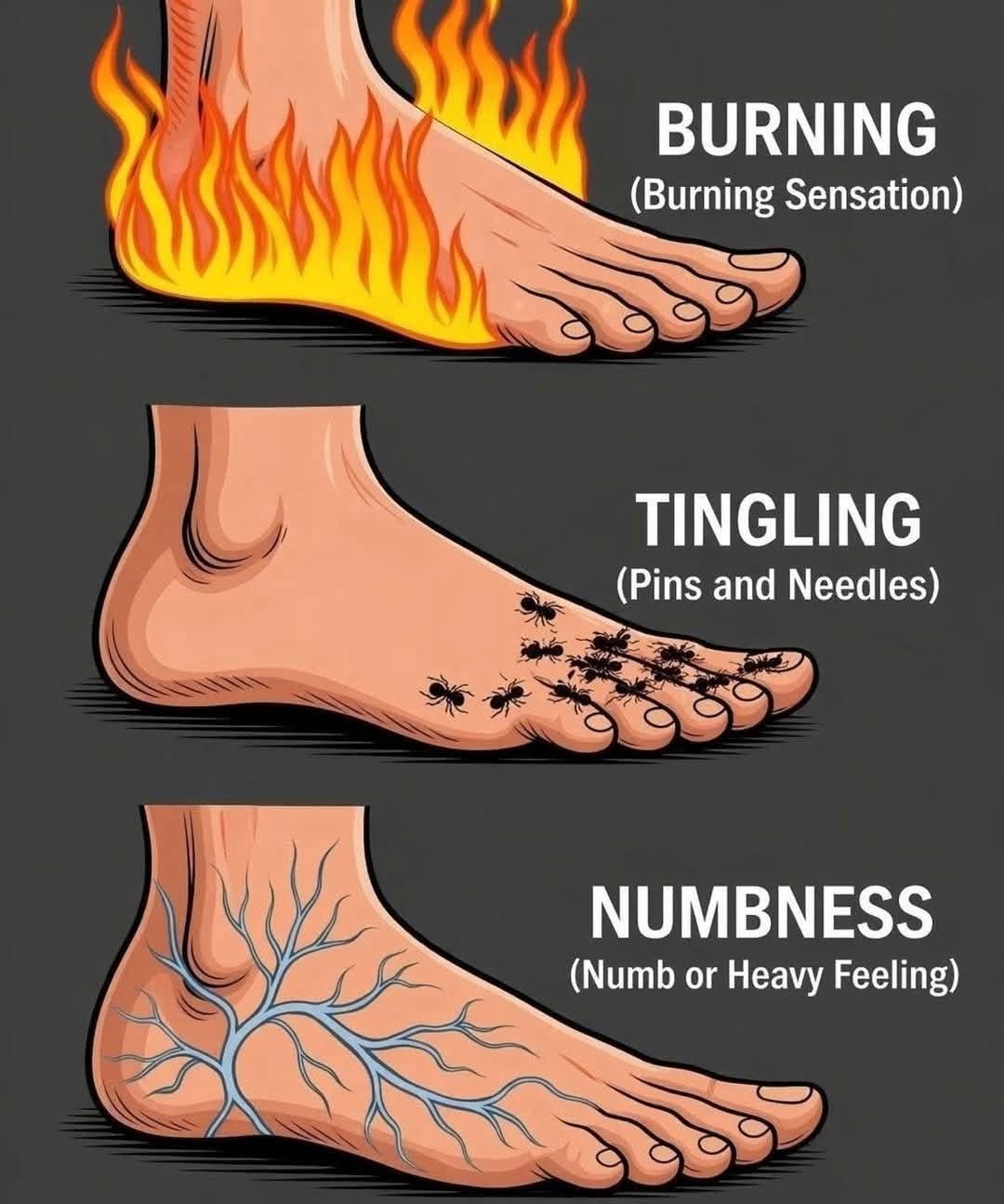
Viral health articles warning that “9 symptoms in your feet” mean you have a dangerous, hidden disease are a classic clickbait formula designed to induce health anxiety. While your feet can indeed offer important clues about your overall health—acting as an early warning system for circulation, nerve function, and systemic conditions—sensationalized lists often tie completely unrelated foot quirks to terrifying medical diagnoses.
Looking at what clinical medicine actually connects to foot symptoms helps separate genuine medical indicators from internet panic.
What Foot Symptoms Can Actually Tell You
When doctors examine your feet, they look for specific, persistent patterns rather than random discomfort. Here is what common foot signs actually point to in clinical practice:
-
1. Persistent Cold Feet or Discolored Toes:
-
The internet claim: A sign of impending systemic organ failure.
-
The medical reality: Chronically cold toes or color changes (such as turning pale or bluish when exposed to cold) are often just poor peripheral circulation or Raynaud’s phenomenon, where small blood vessels spasm in response to cold or stress. However, if accompanied by pain during walking, it can indicate peripheral artery disease (PAD).
-
-
2. Numbness, Tingling, or a “Pins and Needles” Sensation:
-
The internet claim: A sign of nerve decay.
-
The medical reality: Persistent numbness or burning in the feet is frequently linked to peripheral neuropathy, most commonly caused by poorly controlled blood sugar (diabetes) or vitamin deficiencies (such as Vitamin B12).
-
-
3. Swollen Ankles and Feet (Edema):
-
The internet claim: Total body toxicity.
-
The medical reality: Fluid retention in the lower extremities is very common and can be caused by something as simple as long hours of standing, heat, or tight socks. However, persistent swelling can also be related to venous insufficiency, medication side effects, or heart, kidney, and liver issues that deserve a doctor’s evaluation.
-
-
4. Slow-Healing Sores or Wounds:
-
The medical reality: A cut, blister, or ulcer on the foot that refuses to heal is a significant medical red flag. It often points to compromised blood flow or elevated blood sugar levels that impair the body’s natural tissue repair mechanisms.
-
-
5. Painful Big Toe Joint (Stiffness or Throbbing):
-
The medical reality: Sudden, intense pain, redness, and swelling centered around the base of the big toe is a classic presentation of a gout flare-up, caused by a buildup of uric acid crystals in the joint.
-
💡 The Big Takeaway
Your feet are a fantastic diagnostic tool for doctors because they sit farthest from your heart and bear the brunt of your daily movement. However, if you are experiencing persistent, unexplained changes in your feet—like chronic numbness, non-healing sores, or severe pain—the right move is a consultation with a podiatrist or primary care physician, not a self-diagnosis from a sensationalized clickbait list.
Are you or a loved one dealing with a specific foot discomfort right now, or did one of these dramatic “9 symptoms” headlines pop up on your feed?
