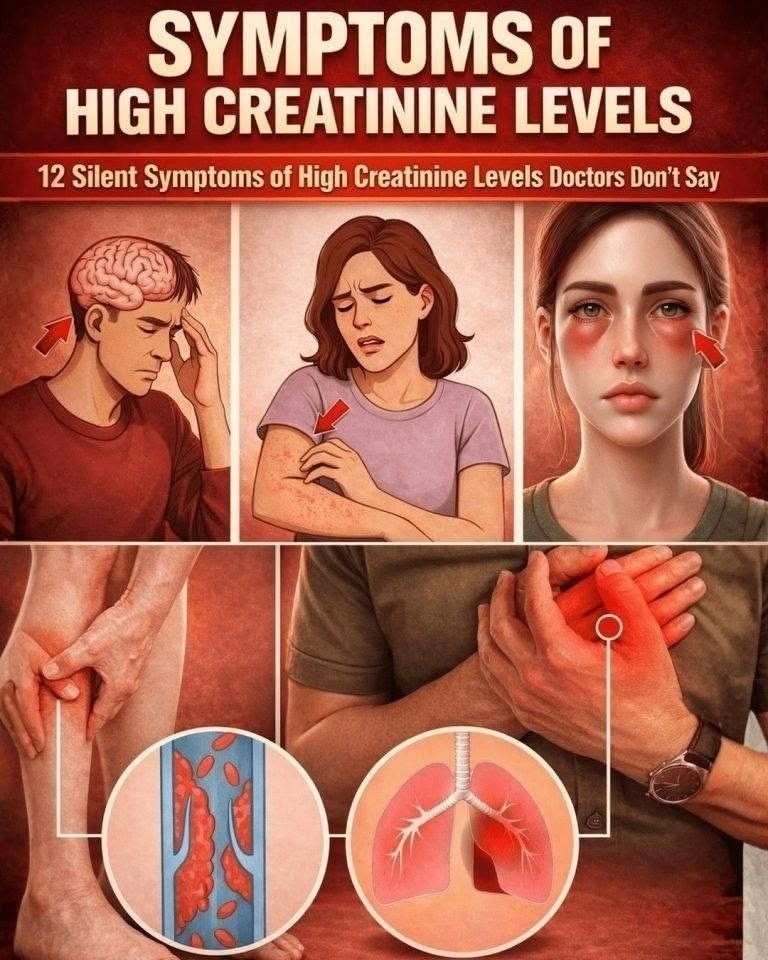
That classic health headline touches on a vital truth about renal health: your kidneys are master filtration units, but they are also remarkably quiet organs. They can lose a significant portion of their filtering capacity before dramatic symptoms force you to take notice.
Creatinine is a waste product generated by normal, everyday muscle breakdown. When your kidneys’ tiny filtering units (glomeruli) become damaged or overworked, they struggle to clear creatinine efficiently, causing its levels to rise in your bloodstream.
Here are the subtle, early signs your body gives when creatinine levels creep up and kidney function begins to waver:
12 Subtle Signs of Elevated Creatinine and Renal Stress
-
Unexplained Fatigue and Brain Fog:
-
The Mechanism: Healthy kidneys produce a hormone called erythropoietin (EPO), which tells your bone marrow to make red blood cells. When kidney function declines, EPO drops, leading to anemia. Without enough oxygen-carrying red blood cells, your brain and muscles starve for oxygen, leaving you exhausted.
-
-
Foamy or Bubbly Urine:
-
The Mechanism: If your urine consistently looks like it’s been whipped up like beer foam, it often indicates proteinuria (protein leaking into the urine). Healthy kidney filters trap large proteins in the blood; damaged filters let them slip through.
-
-
Changes in Urination Frequency (Especially at Night):
-
The Mechanism: As the kidneys’ ability to concentrate urine declines, your body loses its fine-tuning ability, often leading to increased nighttime bathroom trips (nocturia) or sudden shifts in output volume.
-
-
Puffiness Around the Eyes (Periorbital Edema):
-
The Mechanism: When your kidneys fail to balance sodium and fluid levels, or leak vital proteins that hold fluid inside your blood vessels, fluid accumulates in loose connective tissues—most noticeably causing a puffy, swollen appearance around your eyes, particularly in the morning.
-
-
Swelling in the Ankles, Feet, and Lower Legs:
-
The Mechanism: Reduced kidney clearance means excess sodium and water build up in the body. Gravity pulls that fluid downward, leading to pitting edema in your lower extremities.
-
-
Persistent Itchy, Dry Skin:
-
The Mechanism: Your kidneys play a major role in maintaining the balance of minerals like phosphorus and calcium in your blood. When renal filtration drops, phosphorus builds up in the blood, triggering severe, deep-seated skin itching that moisturizers cannot fix.
-
-
Muscle Cramps and Twitches:
-
The Mechanism: Imbalances in electrolytes—particularly calcium, potassium, and magnesium—are common when kidney function is impaired, causing spontaneous muscle spasms or painful cramping, especially in the legs at night.
-
-
A Metallic Taste in the Mouth or Ammonia Breath:
-
The Mechanism: As kidney filtration drops, urea builds up in the blood (a condition called uremia). Urea breaks down into ammonia in saliva, creating a foul, metallic taste that ruins the flavor of food and often leads to a sudden aversion to eating meat.
-
-
Nausea, Vomiting, and Loss of Appetite:
-
The Mechanism: The accumulation of uremic toxins circulating in the bloodstream irritates the gastrointestinal tract, frequently triggering persistent morning nausea, general malaise, and a blunted appetite.
-
-
High Blood Pressure (Hypertension):
-
The Mechanism: It is a two-way street: chronic high blood pressure damages kidney blood vessels, but failing kidneys also secrete renin, a hormone that drives blood pressure even higher. Sudden, hard-to-control blood pressure is a major warning sign.
-
-
Shortness of Breath:
-
The Mechanism: This can happen due to two renal factors: anemia starving your lungs of oxygen, or fluid backing up into your lungs (pulmonary congestion) due to impaired fluid excretion.
-
-
Lower Back or Flank Pain:
-
The Mechanism: While many chronic kidney issues are painless, sudden inflammation, kidney stones, polycystic changes, or severe pyelonephritis can cause a dull, persistent ache in the mid-to-lower back just under the ribcage.
-
The Takeaway
Because early kidney stress rarely causes dramatic pain, tracking routine lab work—specifically checking your Serum Creatinine and calculating your eGFR (Estimated Glomerular Filtration Rate)—is the only foolproof way to know how well your filtration system is running.
Are you looking into kidney markers out of general preventative curiosity, or did a recent routine blood test show a shift in your creatinine levels?
