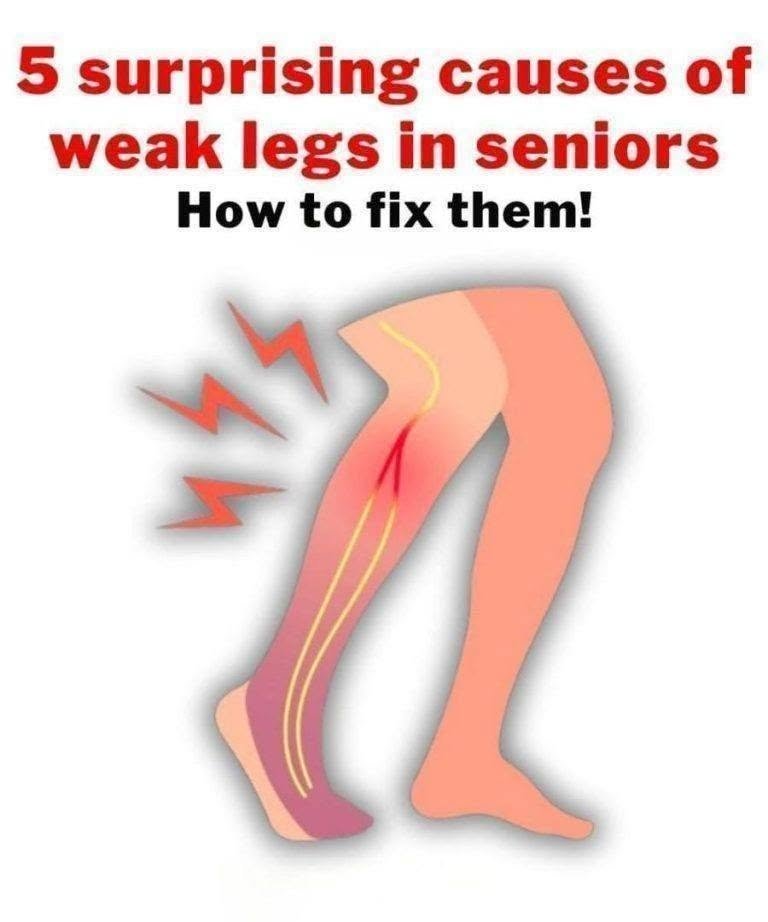
That headline touches on a very real and significant concern for older adults, but packaging it as a list of “surprising causes” often steers people toward rare medical anomalies rather than addressing the most common, everyday factors.
In clinical reality, when a senior experiences progressive leg weakness, it is rarely a mysterious ailment; it usually stems from well-understood physiological shifts, lifestyle changes, or manageable medical issues.
Here is an evidence-based breakdown of the primary reasons behind leg weakness in older adults and how they are realistically addressed:
1. Sarcopenia (Age-Related Muscle Loss)
-
The Reality: Starting around age 30, adults naturally begin to lose muscle mass and strength, a process that accelerates significantly after age 60. When leg muscles (particularly the quads and calves) weaken, everyday tasks like standing up from a chair or climbing stairs become notably harder.
-
How to Fix It: Progressive resistance training. Lifting weights, using resistance bands, or doing body-weight sit-to-stands stimulates muscle protein synthesis at any age, effectively rebuilding strength and stability.
2. Peripheral Artery Disease (PAD) or Poor Circulation
-
The Reality: Narrowed arteries caused by plaque buildup can restrict blood flow to the lower extremities. This often manifests as cramping, heaviness, or weakness in the legs during walking that conveniently disappears after resting for a few minutes.
-
How to Fix It: Medical management (such as statins or blood pressure control), smoking cessation, and supervised walking programs designed to improve collateral blood flow in the legs.
3. Vitamin B12 Deficiency or Peripheral Neuropathy
-
The Reality: B12 absorption declines with age, especially if a person takes acid-reducing medications (like proton pump inhibitors). A deficiency can damage nerve fibers, leading to numbness, tingling, unsteadiness, and a feeling of weakness in the legs and feet.
-
How to Fix It: Blood tests to check vitamin levels, followed by dietary adjustments or B12 supplements/injections if prescribed by a physician.
4. Medication Side Effects
-
The Reality: A wide range of common prescription drugs can cause muscle weakness, fatigue, or coordination issues. This includes statins (which can occasionally cause muscle aches or weakness) as well as certain blood pressure medications, sedatives, or diuretics that cause electrolyte imbalances.
-
How to Fix It: Reviewing medication lists with a doctor or pharmacist to identify if a dose adjustment or alternative drug can resolve the issue.
5. Joint Degeneration (Osteoarthritis of the Hips or Knees)
-
The Reality: Severe arthritis pain often triggers a subconscious protective mechanism called “arthrogenic muscle inhibition,” where the nervous system deliberately shuts down or weakens the surrounding muscles to protect a damaged joint from movement.
-
How to Fix It: Physical therapy to strengthen supporting muscles safely, joint management, and pain control strategies guided by a physician.
The Takeaway: Leg weakness in older adults is usually a combination of natural muscle deconditioning, circulation factors, or medication side effects rather than a sudden hidden disease. Identifying the root cause with a healthcare provider is the best way to target the right fix.
Are you looking into this to help support an older family member, or did this article catch your attention regarding your own routine?
