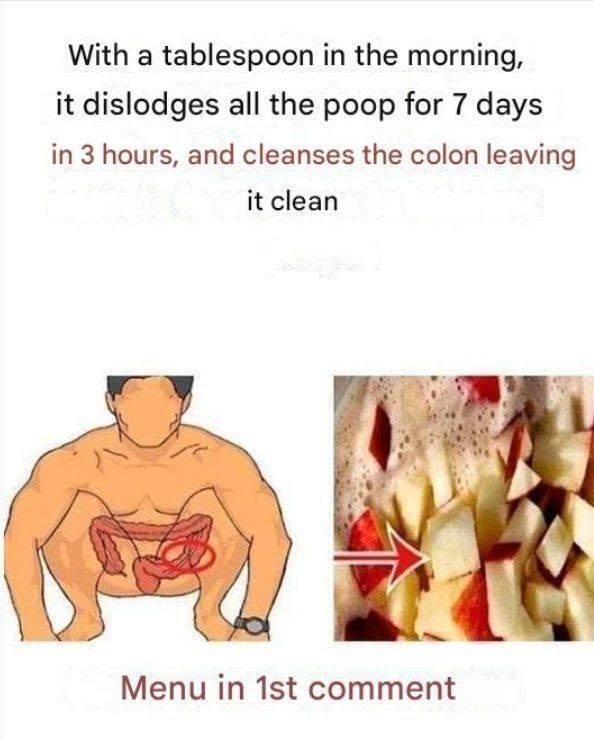
That headline is refreshingly grounded. By leaning on an expert source (“according to a dietician”) and offering concrete, practical steps rather than a vague “miracle cleanse,” it treats a very common and uncomfortable issue with actual physiological sense.
When dealing with constipation, internet wellness culture loves to push harsh detox teas or aggressive flushes. In clinical reality, helping the body pass stool smoothly comes down to three foundational physiological principles: water, bulk, and mechanical movement.
Here is the evidence-based breakdown of what truly facilitates comfortable evacuation, aligned with expert dietary science:
1. Soluble and Insoluble Fiber (The Bulk Builders)
-
How It Works: Fiber is the gold standard of digestive regularity.
-
Insoluble fiber (found in wheat bran, whole grains, and the skins of fruits/vegetables) acts like a gentle broom, adding physical bulk to your stool and stimulating the muscular walls of your colon to contract (peristalsis).
-
Soluble fiber (found in oats, chia seeds, flaxseeds, and beans) absorbs water like a sponge, forming a soft, gel-like consistency that makes stool smooth and easy to pass.
-
-
The Expert Catch: If you increase fiber without increasing your water intake, you will actually make constipation worse by creating a dense, dry blockage.
2. Adequate Hydration (The Lubricant)
-
How It Works: Your colon’s main job in the final stages of digestion is to reabsorb water from your waste. If you are even mildly dehydrated, your colon pulls extra water out, leaving you with hard, dry, pellet-like stools that are painful to evacuate.
-
The Practical Approach: Drinking enough fluids throughout the day ensures that fiber can do its job properly, keeping stools hydrated, soft, and easy to move through the digestive tract.
3. Healthy Fats and Lubrication
-
How It Works: Dietary fats stimulate the gastrocolic reflex—a normal physiological response where eating triggers contractions in your colon. Furthermore, healthy fats (like olive oil, avocado, or nuts) act as a mild natural lubricant for the intestinal lining, helping contents slide through more smoothly.
-
The Expert Reality: You don’t need a “fat flush” or spoonfuls of raw oil; simply incorporating healthy fats into your balanced meals keeps your digestive tract greased and functioning seamlessly.
The Takeaway: Relieving constipation doesn’t require harsh chemical laxatives or weird internet hacks. It relies on the steady triumvirate of fiber, water, and healthy fats working together to give your digestive system the bulk and moisture it naturally needs.
Are you looking to tweak your daily nutrition to support better digestion, or did this dietician’s advice catch your eye for a specific reason?
