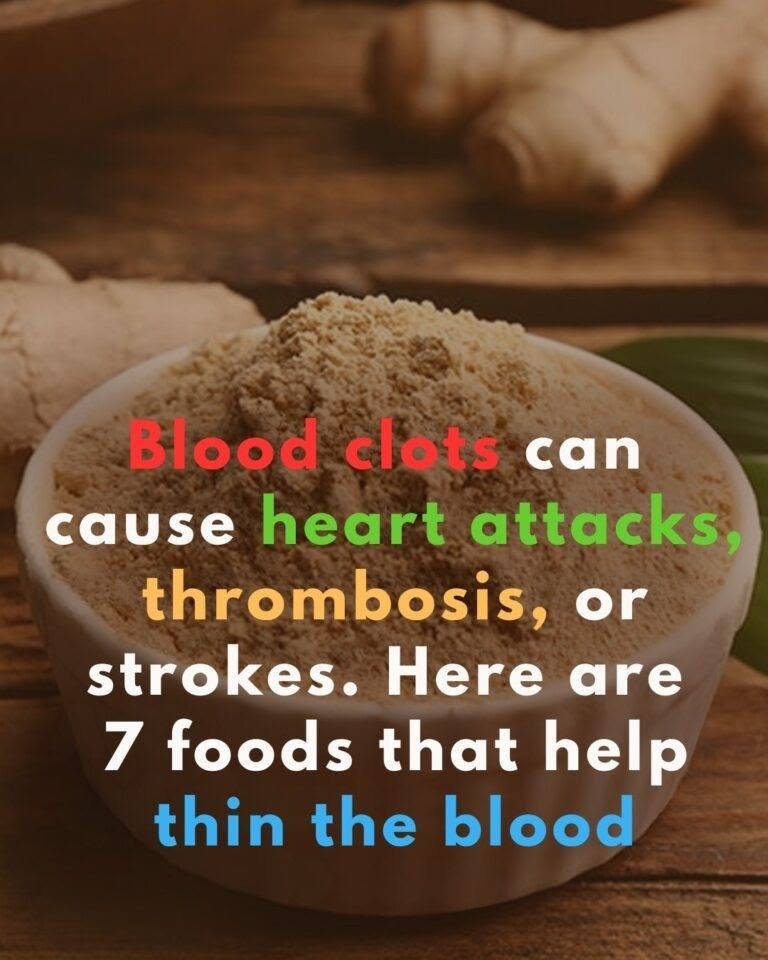
That headline uses the classic “secret list” format to make everyday kitchen ingredients sound like potent, pharmaceutical-grade treatments. While certain foods contain natural compounds that can gently influence circulation or platelet function, no food acts as a true medical blood thinner (like Warfarin, Eliquis, or daily aspirin) that can prevent strokes or treat dangerous blood clots on its own.
Here is the realistic truth behind foods frequently cited for their mild blood-thinning properties:
1. Garlic and Onions (Allium Family)
-
What’s in them: They contain sulfur compounds (like ajoene in garlic) that can exhibit mild antiplatelet effects, meaning they may slightly discourage blood cells from clumping together.
-
The reality: You would have to consume raw garlic in extraordinarily large, uncomfortable quantities to achieve any measurable anticoagulant effect. Eating normal amounts in cooking is wonderful for heart health, but it won’t replace medication.
2. Ginger
-
What’s in it: Ginger contains natural compounds called salicylates—the same chemical family that aspirin is derived from—which can gently support smooth blood flow.
-
The reality: While a soothing cup of ginger tea or cooking with fresh ginger is healthy, culinary amounts have a very minor impact on coagulation.
3. Turmeric
-
What’s in it: The active compound curcumin in turmeric has well-known anti-inflammatory and mild antiplatelet properties.
-
The reality: Curcumin is poorly absorbed by the body on its own, and its influence on blood clotting is mild. However, if someone is already taking strong prescription anticoagulants, taking high-dose turmeric supplements could theoretically increase the risk of bruising or bleeding.
4. Cayenne Pepper and Chili Peppers
-
What’s in them: Rich in capsaicin, spicy peppers can help stimulate circulation and support healthy blood pressure.
-
The reality: They improve vascular tone and blood flow rather than thinning the blood itself, making them great for circulation but distinct from actual blood thinners.
5. Vitamin E-Rich Foods (Almonds, Sunflower Seeds, Avocado)
-
What’s in them: Vitamin E acts as a natural antioxidant and, in high supplemental doses, can exhibit mild blood-thinning properties.
-
The reality: Dietary amounts found in normal portions of nuts and seeds are entirely safe and supportive of cardiovascular health.
A Crucial Safety Warning: While these foods are safe and healthy for the general population, anyone who is already prescribed blood-thinning medication or preparing for surgery should be cautious with high-dose supplements of garlic, ginger, turmeric, or vitamin E, as they can occasionally interact with medications and increase bleeding risks.
Are you looking into natural ways to support your circulation, or managing a heart health concern?
