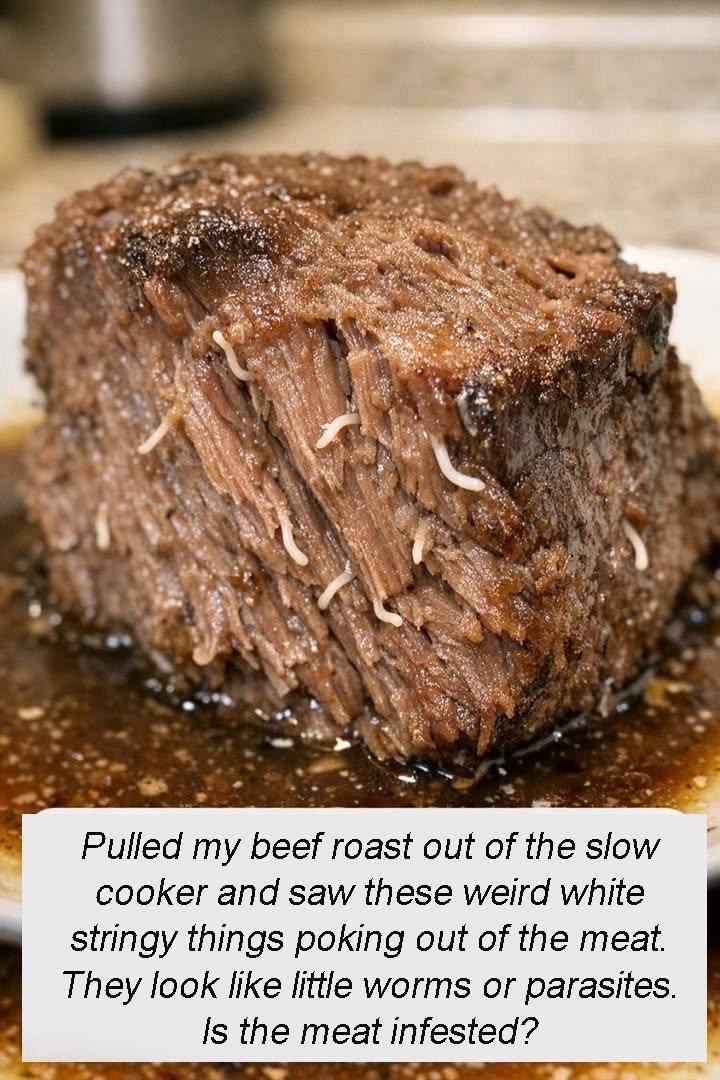
Take a deep breath—your beef roast is almost certainly not infested with worms or parasites.
Seeing strange white, stringy strands poking out of meat after a long cook can be alarming, but what you are looking at is a completely normal anatomical part of the animal. Here is what is actually happening in your slow cooker:
1. Muscle Fibers and Bundles (Myofibrils)
-
What they are: Meat is made up of bundles of long muscle cells (fibers). When you cook a tough cut of beef (like a chuck roast or brisket) for hours in a slow cooker, the meat shrinks and tightens as moisture drives out.
-
The visual effect: This thermal contraction causes the individual muscle bundles to separate and fray apart, exposing string-like strands that look very much like little worms or threads.
2. Connective Tissue and Collagen
-
What they are: Beef roasts contain structural connective tissue, primarily collagen and elastin, which bind the muscle groups together.
-
The visual effect: When slow-cooked, tough collagen melts down into gelatin. However, thicker bands of connective tissue, silver skin, or blood vessel walls can remain intact, turning into whitish, rubbery, stringy ribbons as the surrounding meat pulls away.
3. Why Slow Cookers Make This More Noticeable
Slow cookers use sustained, gentle heat to break down tough cuts until they fall apart. Because the cooking process is so thorough, it unbinds the muscle fibers more dramatically than high-heat roasting or pan-searing, often revealing these internal structures in unexpected ways.
The Takeaway: Parasites in commercially raised, inspected beef are exceedingly rare, and they rarely look like clean, uniform muscle fibers poking out of cooked meat. What you are seeing is just the natural architecture of the beef.
Does the texture of the roast look otherwise normal, or are you seeing any unusual discoloration alongside those strands?
