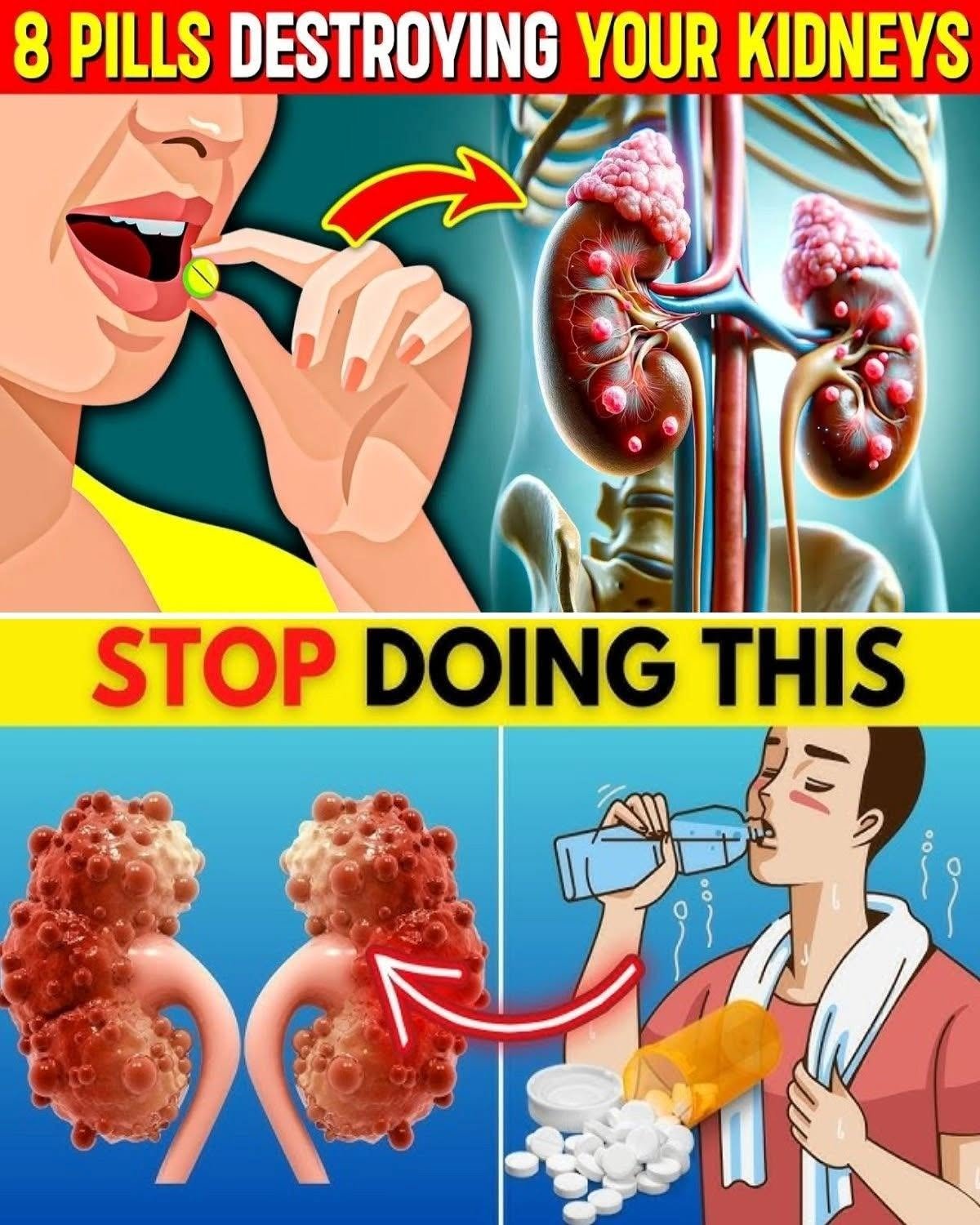
That classic warning headline hits right at the heart of renal pharmacology. Because your kidneys act as the ultimate filtration plant of the human body—processing about 200 quarts of blood daily and concentrating waste products into tiny spaces—they are intensely vulnerable to chemical stress, restricted blood flow, and direct cellular toxicity.
While many of these medications are vital when used appropriately, understanding how they impact renal function is key to protecting your long-term health. Here are 8 medications that can strain or damage the kidneys, along with the physiological mechanisms behind them:
1. Over-the-Counter NSAIDs (Pain Relievers)
-
The Culprits: Ibuprofen (Advil, Motrin), naproxen (Aleve), and high-dose or chronic aspirin.
-
The Mechanism: NSAIDs block prostaglandins—hormone-like compounds that normally keep the blood vessels supplying the kidneys dilated. When those vessels constrict, vital blood flow drops sharply, which can precipitate acute kidney injury, especially if you are even mildly dehydrated.
2. Proton Pump Inhibitors (PPIs for Acid Reflux)
-
The Culprits: Omeprazole (Prilosec), lansoprazole (Prevacid), pantoprazole.
-
The Mechanism: While safe for short-term use, chronic, multi-year daily use of PPIs has been linked in clinical studies to an increased risk of chronic kidney disease and acute interstitial nephritis—an allergic-type inflammation that damages the kidney’s internal structures over time.
3. Certain Heavy-Duty Antibiotics
-
The Culprits: Aminoglycosides (like gentamicin) and vancomycin.
-
The Mechanism: Administered primarily in hospital settings for severe, stubborn bacterial infections, these powerful antibiotics can accumulate directly inside the delicate cells of the kidney’s filtering tubules, causing direct cellular toxicity if blood levels aren’t closely monitored.
4. Blood Pressure Drugs under Dehydration Conditions (ACE Inhibitors & ARBs)
-
The Culprits: Lisinopril, enalapril, losartan, valsartan.
-
The Mechanism: Paradoxically, these are prescribed to protect the kidneys in chronic kidney disease by lowering pressure inside the tiny filtering units. However, if a patient experiences severe acute fluid loss (from vomiting, diarrhea, or heavy sweating) and continues taking them unmonitored, the sudden drop in filtration pressure can cause acute renal failure.
5. Aggressive Diuretics (“Water Pills”)
-
The Culprits: Furosemide (Lasix), hydrochlorothiazide.
-
The Mechanism: While essential for managing fluid overload or severe heart failure, taking high doses or misusing diuretics can rapidly deplete total body water and blood volume. This starves the kidneys of the perfusion pressure they need to function efficiently.
6. Lithium (Mood Stabilizer)
-
The Culprits: Lithobid.
-
The Mechanism: Used primarily for bipolar disorder, long-term lithium therapy requires strict blood level monitoring. Over years of use, it can gradually impair the kidneys’ ability to concentrate urine, occasionally leading to a condition known as chronic interstitial nephritis.
7. Intravenous Radiocontrast Dyes
-
The Culprits: Iodinated contrast agents used during CT scans, MRIs, or angiograms.
-
The Mechanism: While not a daily pill, these heavy diagnostic liquids can cause temporary, sharp decreases in renal blood flow and direct oxidative stress to filtering cells—particularly in older adults or anyone with pre-existing, silent kidney vulnerability.
8. Certain Antiviral and Transplant Medications
-
The Culprits: Acyclovir or immunosuppressants like tacrolimus and cyclosporine.
-
The Mechanism: Some antiviral drugs can precipitate microscopic, un-dissolved crystals that physically block the tiny filtering tubules inside the organ. Meanwhile, anti-rejection medications can cause chronic constriction of the local blood vessels feeding the kidneys.
The Renal Protection Protocol
Medication safety is all about context, dosing, and physiological resilience. The ultimate safeguards for your kidneys are remarkably consistent: maintain exceptional daily hydration, avoid chronic, casual reliance on over-the-counter pain relievers, and periodically review your complete medication and supplement profile with a physician or clinical pharmacist.
Are you auditing a medicine cabinet right now, or looking into specific ways to support your kidney function and metabolic health?
