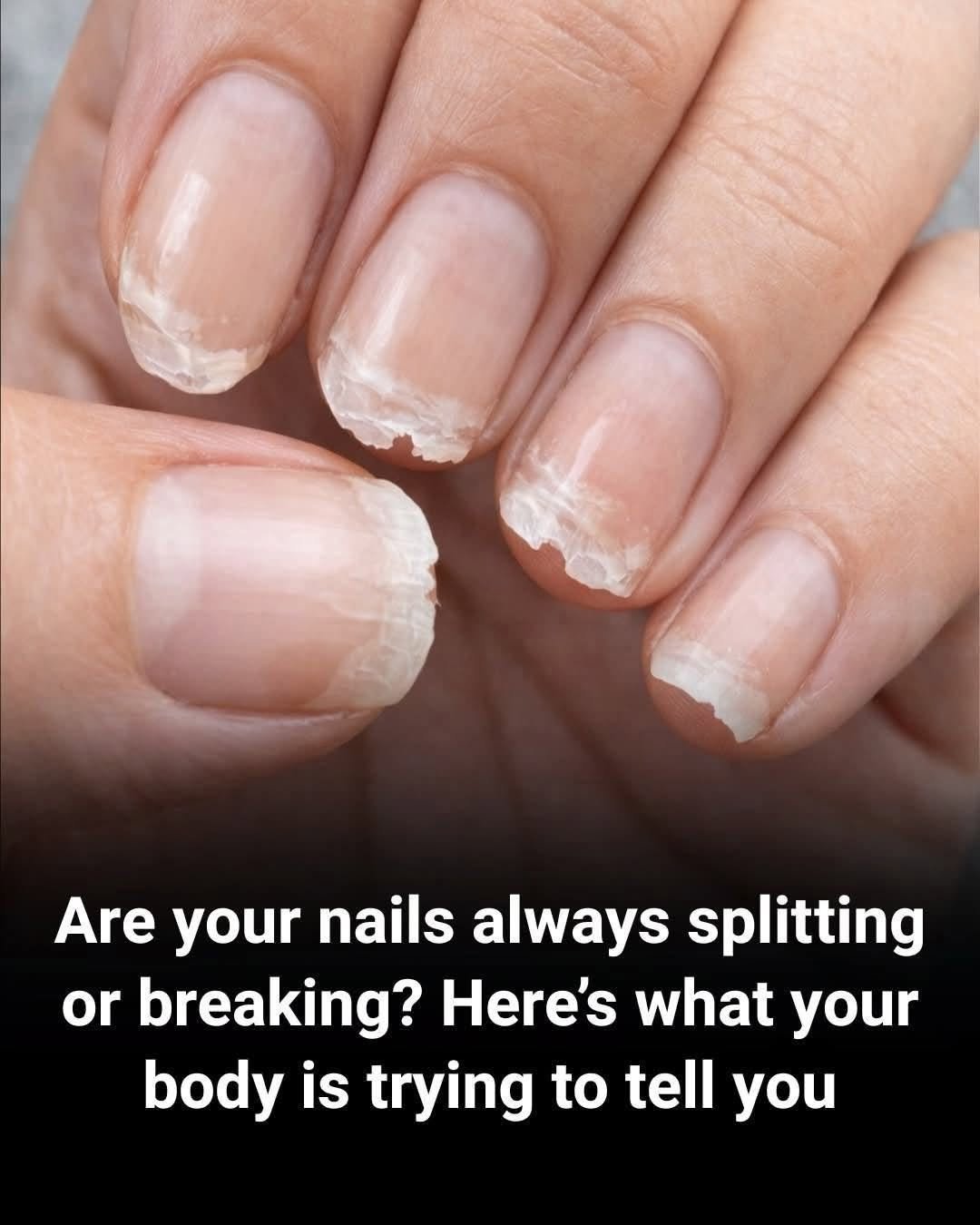
That classic health and wellness headline highlights a very common physical frustration: weak, splitting, peeling, or brittle nails. While it’s easy to write off nail changes as mere cosmetic annoyances caused by frequent hand-washing, harsh cleaning chemicals, or too many gel manicures, our nails are actually tough, keratinized diagnostic windows into our internal biochemistry.
Because fingernails grow relatively slowly (about 3 millimeters a month), they act as a historical archive of your nutritional status, circulation, and metabolic health over the past several months.
Here is what your body might be trying to tell you when your nails become weak or brittle:
What Weak or Brittle Nails Can Indicate
-
Iron Deficiency (or Anemia):
-
The Signal: If your nails are not only brittle and thin, but also begin to curve upward at the edges like a tiny spoon (a condition called koilonychia), it is a classic physical sign of iron deficiency anemia. Iron is essential for oxygen transport and cellular repair throughout the body, including the nail matrix where new nail growth originates.
-
-
Suboptimal Dietary Protein Intake:
-
The Signal: Nails are constructed almost entirely of a tough, fibrous structural protein called keratin. If your diet is chronically low in high-quality protein, or if your body struggles with absorption, your system lacks the raw amino building blocks (like cysteine and proline) needed to forge strong, resilient nail plates.
-
-
Chronic Dehydration and Moisture Deprivation:
-
The Signal: While people often think brittle nails mean they need more oil, they frequently reflect a lack of systemic hydration. When total body water is low, the nail plate loses its natural moisture balance, causing it to become dry, brittle, brittle-peeling, and prone to cracking under minor stress.
-
-
B-Vitamin Deficiencies (Particularly Biotin):
-
The Signal: Biotin (Vitamin B7) plays a fundamental role in cell growth and the metabolism of amino acids required for keratin production. A shortage can leave nails noticeably fragile, thin, and prone to splitting down the center.
-
-
Thyroid Dysfunction (Hypothyroidism):
-
The Signal: Your thyroid gland acts as the master thermostat and metabolic regulator for your entire body. When the thyroid slows down, cellular turnover and metabolic processes grind down with it. This sluggishness often manifests as dry skin, hair thinning, and slow-growing, weak, or ridged fingernails.
-
-
Zinc or Essential Fatty Acid Shortages:
-
The Signal: Zinc is a vital trace mineral required for rapid cell division and tissue growth. A deficiency can show up as weak nails, sometimes accompanied by tiny white spots or lines across the nail bed. Similarly, a lack of healthy omega-3 fatty acids can compromise the lipid barrier that locks moisture into the nail plate.
-
The Bio-Hacker Nail Protocol
If you want to strengthen your nails from the inside out, the solution rarely lies in expensive topical hardeners alone. Supporting strong keratin production requires a targeted approach:
-
Prioritize complete proteins at every meal to supply the raw building blocks.
-
Hydrate consistently with a focus on balanced electrolytes to maintain systemic moisture.
-
Check key micronutrients (like iron, ferritin, zinc, and B-vitamins) through routine blood work if brittleness persists despite lifestyle tweaks.
Have you noticed any other subtle physical changes lately, or are you looking for ways to strengthen your nails and overall nutritional profile?
