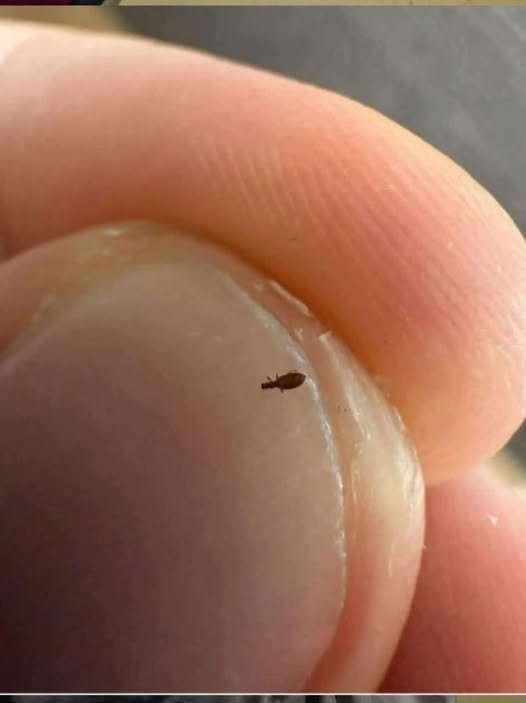
Finding a bug in a friend’s hair can certainly be startling, but identifying what it is can help you figure out the next steps. Without seeing it directly, it usually falls into one of a few common categories:
1. Head Lice (Most Likely if it was near the scalp)
-
What they look like: Adult head lice are tiny, wingless insects about the size of a sesame seed (roughly 2–3 mm long). They are usually grayish-white, tan, or light brown.
-
Key clues: If your friend has been experiencing an itchy scalp (especially around the nape of the neck or behind the ears), check the hair shafts closely. You might see tiny, oval-shaped eggs called nits glued firmly to individual hairs close to the scalp (unlike dandruff, nits won’t easily brush or shake off).
-
Behavior: Lice crawl quickly; they do not jump or fly.
2. Fleas (Possible if they have pets)
-
What they look like: Fleas are small, dark brown or reddish-brown insects. They are flattened sideways and are generally easier to spot than lice.
-
Key clues: If your friend spends a lot of time around dogs or cats that have fleas, a stray flea might have hopped onto them.
-
Behavior: Fleas are famous for their powerful hind legs and will jump significant distances rather than just crawling.
3. Ticks (Less common, but possible after being outdoors)
-
What they look like: Tiny ticks (sometimes as small as a poppy seed in their nymph stage) can hitch a ride if your friend has been walking through tall grass, wooded areas, or hiking.
-
Key clues: Unlike lice or fleas which move around actively in the hair, a tick will typically anchor itself directly into the skin of the scalp to feed on blood.
4. A Stray Outdoor Bug
-
Sometimes, harmless outdoor insects (like a small beetle, aphid, or gnat) get accidentally tangled or trapped in someone’s hair while they are outside, trees, or gardens. These usually don’t crawl down to the scalp or lay eggs.
What to Do Next
-
Inspect Carefully: Have your friend sit under a bright light. Part their hair section by section, paying close attention to the scalp, behind the ears, and the back of the neck.
-
Use a Fine-Toothed Comb: If you suspect lice, run a fine-toothed nit comb through wet hair. Wiping the comb on a wet paper towel can help reveal any tiny bugs or eggs.
-
Do Not Panic: If it turns out to be head lice or fleas, both are extremely common, completely manageable, and treatable with over-the-counter shampoos or specialized treatments from a local pharmacy.
Did the bug look like a tiny, flat crawler clinging to the hair, or was it a jumping bug?
