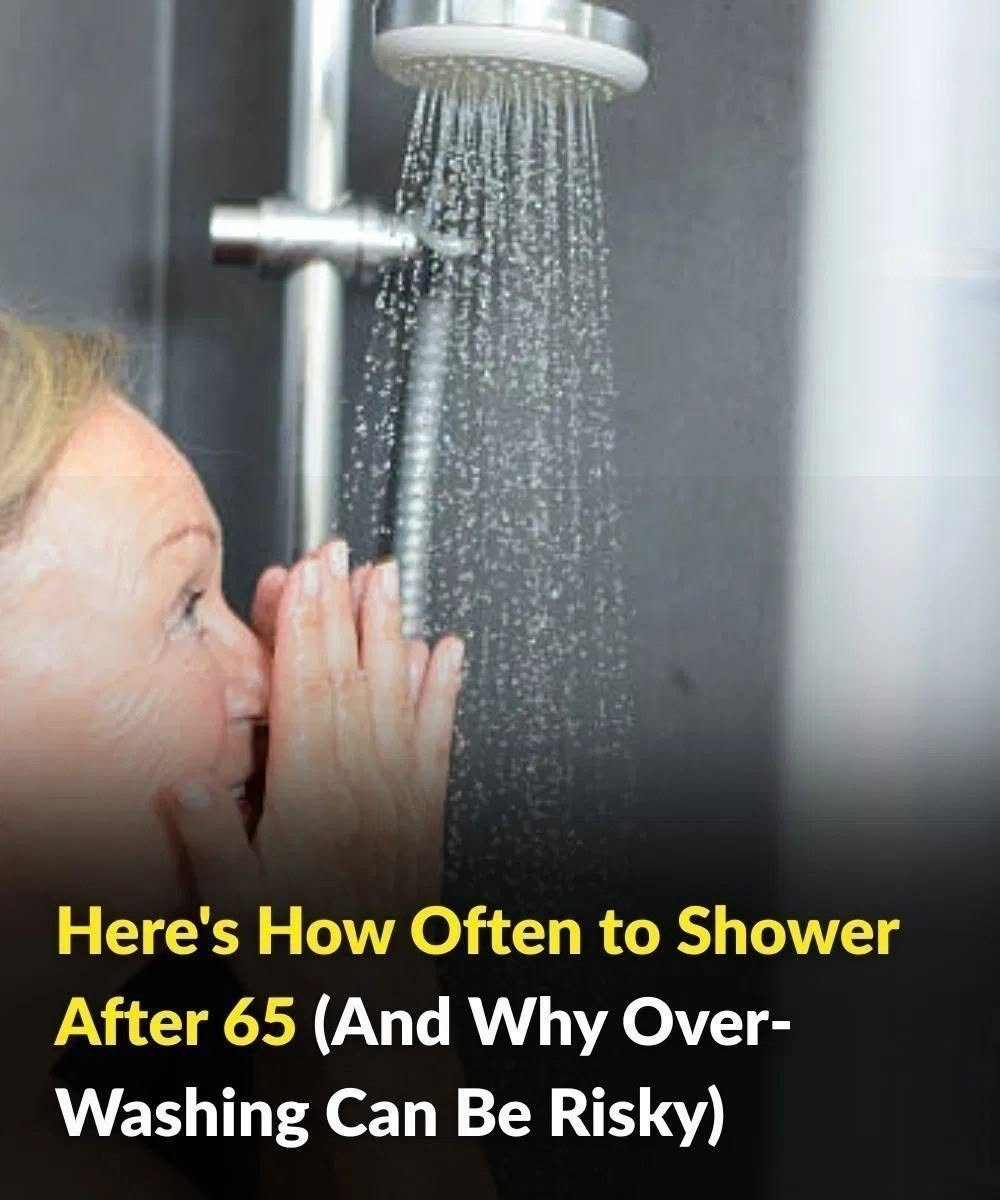
That headline takes a completely normal daily hygiene routine, slaps an arbitrary age limit on it, and tries to convince you that your skin is about to revolt if you take too many showers.
By warning that “over-washing can be harmful to your health,” it plays on the anxiety that aging skin is fragile and easily damaged, setting up a dramatic narrative where standard soap and water are suddenly dangerous.
In dermatological and clinical reality, skin changes as we age, but hygiene isn’t dictated by a birthday milestone. Here is the grounded, clinical breakdown of what happens to aging skin and why the “how often should you shower” debate is really about skin barrier physics, not a rigid calendar rule:
1. How Aging Skin Actually Changes
-
Decreased Sebum and Moisture: As we age, our sebaceous (oil) glands naturally produce less sebum, and the skin’s ability to retain moisture (lipid barrier function) gradually declines. This is why older adults are more prone to dry, itchy skin (xerosis) regardless of how often they wash.
-
The Problem with Hot Water and Harsh Soaps: It isn’t the water itself that causes issues; it’s stripping away what little natural oils the skin has left. Long, steaming-hot showers combined with heavily foaming, alkaline soaps break down the skin’s protective lipid barrier, leading to irritation, cracks, and itching.
2. The Clinical Reality of “Over-Washing”
While the headline makes it sound like a systemic health crisis, the “harm” of over-washing is purely dermatological:
-
Eczema and Pruritus (Itching): Stripping the skin barrier repeatedly can lead to severe winter itch or asteatotic eczema.
-
The Fix is Technique, Not Just Frequency: You don’t necessarily have to abandon your preferred shower schedule at 65. Instead, dermatologists recommend tweaking how you wash: use warm (not scalding hot) water, choose gentle, fragrance-free cleansers, limit scrub-down time, and apply a good moisturizer immediately afterward while the skin is still damp.
3. Tailoring Hygiene to Your Actual Lifestyle
There is no universal commandment saying everyone over 65 must drop down to two showers a week.
-
If you are active, work out, garden, or live in a hot, humid climate, your skin and body need cleansing from sweat, bacteria, and environmental debris.
-
If you are less active or living in a dry climate, you might naturally find that you don’t need daily full-body soaping.
The Takeaway: Your skin doesn’t hit an expiration date at 65 that makes water your enemy. It’s simply about protecting your skin barrier with gentler products and lukewarm water as your skin’s natural oils shift over time.
Did your feed try to convince you that aging skin requires a strict, minimalist shower schedule, or are you just keeping an eye out for practical dermatological sense?
