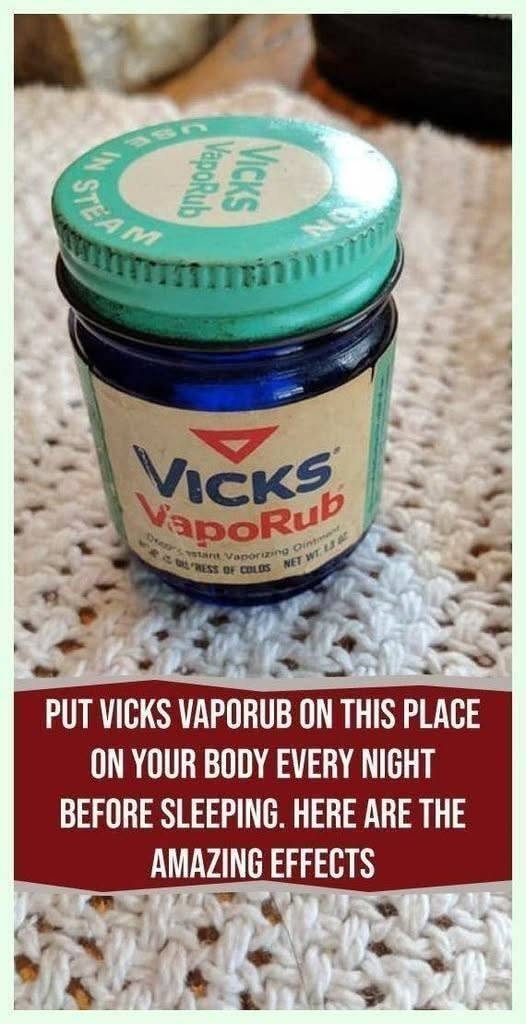
The internet has long had a fascination with transforming humble over-the-counter products into household panaceas. Among these, Vicks VapoRub holds a legendary status, with viral forums and lifestyle blogs routinely suggesting it for everything from fungal infections and acne to chronic joint degeneration and bug repellent.
When evaluated through the lens of dermatology, clinical pharmacology, and human physiology, these sweeping claims collapse. Vicks VapoRub is an effective, targeted topical comfort measure, but it is far from the universal chemical fix the internet makes it out to be.
The Real Pharmacology: What Vicks Actually Contains
The therapeutic profile of classic Vicks VapoRub relies entirely on three active medicinal compounds suspended in a petroleum jelly base: camphor (4.8%), menthol (2.6%), and eucalyptus oil (1.2%).
-
The Neurological Sensory Trick: Menthol binds directly to cold-sensitive receptors (TRPM8 channels) in the nasal passages and skin. When you inhale the vapors or apply the ointment, these receptors fire signals to your brain, creating an intense, cooling sensation that tricks your central nervous system into feeling like your airways are wide open. Physiologically, however, it does not physically reduce nasal swelling, alter airway diameter, or change mucus production.
-
The Counter-Irritant Mechanism: Camphor and eucalyptus act as mild topical analgesics. When rubbed onto sore muscles or minor joint aches, they create alternating sensations of cooling and warmth that act as a neurological distraction, temporarily overriding pain signals traveling up the spinal cord.
Sorting the Internet Hacks: Fact vs. Fiction
1. The Toenail Fungus Claim
-
The Internet Myth: Because eucalyptus and camphor possess mild antimicrobial characteristics in pure, concentrated lab settings, wellness blogs claim that coating a fungal nail in Vicks will eradicate onychomycosis.
-
The Dermatological Reality: While some small, preliminary observational studies looked at mentholated ointments, petroleum jelly is an occlusive agent that traps moisture—an environment that fungi actually thrive in. True subungual fungal infections reside deep beneath the nail plate and require targeted oral systemic antifungals (like terbinafine) or prescription lacquers. Vicks will not penetrate the nail matrix to cure a deep infection.
2. The Acne, Stretch Mark, and Skin-Soothing Myth
-
The Internet Myth: Slathering the ointment on breakouts or fading stretch marks.
-
The Dermatological Reality: Putting heavy camphor, turpentine oil derivatives, and petroleum on active acne or inflamed skin can cause severe contact dermatitis, chemical burns, or allergic reactions. Furthermore, structural dermal tears like stretch marks cannot be erased by topical counter-irritants.
3. The Danger of Nasal and Airway Misuse
-
The Critical Safety Warning: Internet hacks frequently suggest placing Vicks directly under or inside the nostrils, or melting it into steaming water for inhalation.
-
The Clinical Risk: Camphor is toxic when absorbed through mucous membranes or swallowed. More dangerously, applying petroleum-based products directly under the nose over extended periods allows microscopic petrolatum droplets to be inhaled into the lower airways, where they can accumulate in the lung tissue and trigger a rare, serious condition known as exogenous lipoid pneumonia. Similarly, heating the product can cause thermal and chemical burns to the skin or eyes.
The Clinical Takeaway
Vicks VapoRub is a trusted, helpful over-the-counter tool for easing nighttime coughing and minor muscular discomfort when applied strictly to the chest and throat as directed on the label. It offers temporary, symptomatic relief by hijacking your nervous system’s sensory receptors—not by performing miraculous medical cures across your body.
Are you managing a specific respiratory or muscular symptom, or tracking down another piece of viral health lore?
