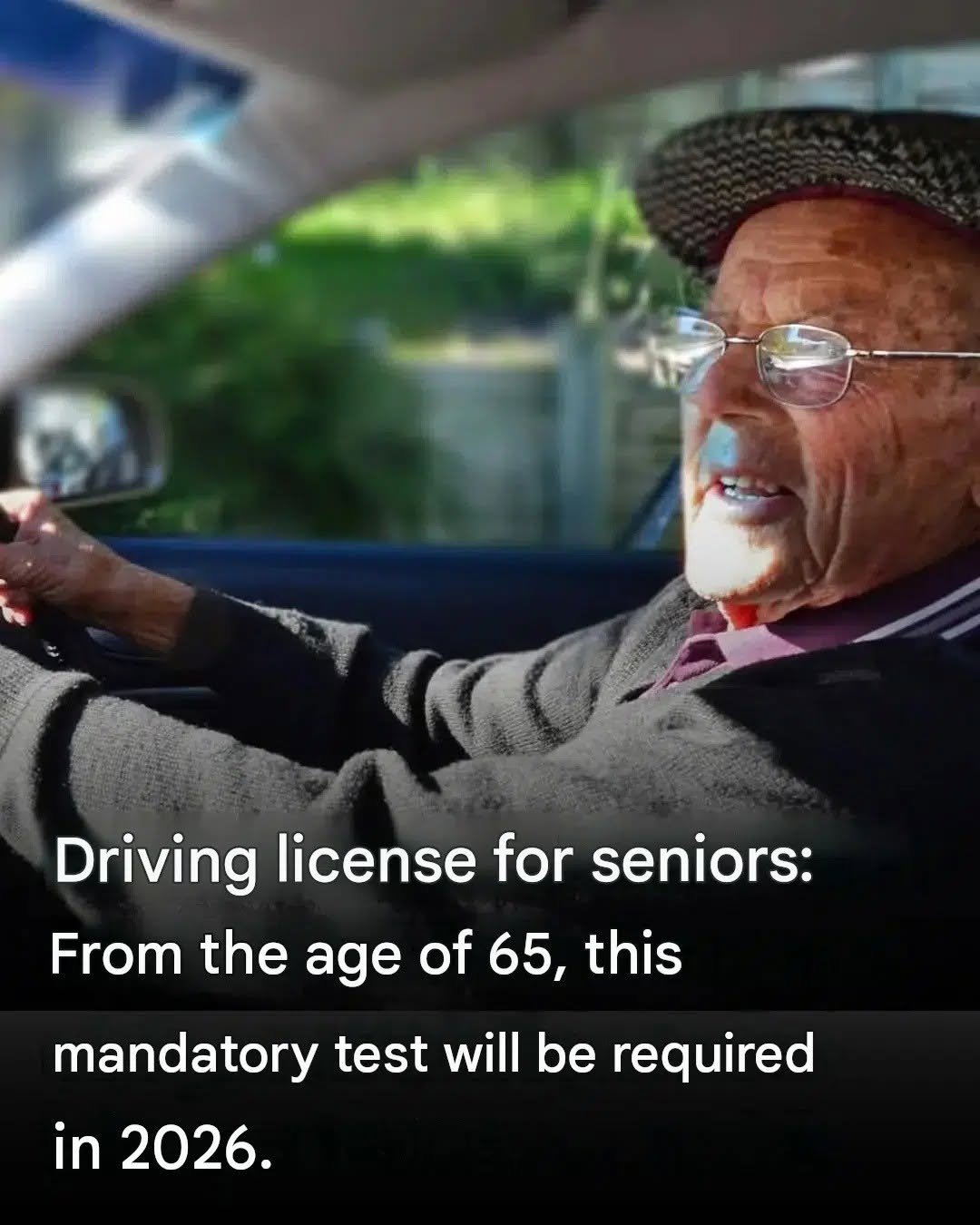
That classic headline—“Driving license for seniors: From the age of 65, this test will become mandatory in 2026”—is a textbook example of viral panic-inducing news. It takes routine administrative updates in regional transportation policy, slaps a sweeping, alarmist age threshold on it, and frames it as a sweeping decree designed to strip older adults of their independence.
When you look past the clickbait and examine actual transit authorities and licensing jurisdictions worldwide, the reality is clear: There is no universal, blanket law making a mandatory practical driving test standard for everyone turning 65.
Here is what transportation departments and medical boards actually focus on as drivers age, and why the “age 65 blanket test” narrative is a myth:
1. The Myth of the “Age 65 Driving Ban or Test”
-
The Viral Fear: Social media and sensational blogs love to claim that the moment you hit a specific birthday (like 65 or 70), the government forces you to retake a stressful on-road driving test just to keep your license.
-
The Legislative Reality: Licensing bodies handle senior drivers based on functional health and medical fitness, not a rigid chronological cutoff. Most jurisdictions recognize that a healthy 65-year-old often has the exact same driving capacity as a 45-year-old. Broad, mandatory road tests for every single driver at 65 do not exist because they are logistically impossible and clinically unjustified.
2. How Licensing Authorities Actually Handle Aging Drivers
Instead of a sudden test at age 65, transportation departments phase in gradual, safety-oriented check-ins as people move deeper into older adulthood (typically starting around ages 75 to 80, depending on the region):
-
Shorter Renewal Cycles: Rather than 5- or 10-year intervals, older drivers in many regions transition to more frequent renewals (such as every 2 years) to catch vision or health changes early.
-
Vision Screenings: Routine eye exams at renewal counters become mandatory to ensure visual acuity, depth perception, and peripheral vision meet safe driving standards.
-
Medical Fitness Reports: Rather than a scary police-style road test, jurisdictions often rely on a Driver’s Medical Examination Report completed by a family doctor or nurse practitioner. This evaluates overall physical health, mobility, and basic cognitive function (like memory and judgment). Practical on-road tests are typically only triggered if a doctor flags a specific medical concern or if there is a documented history of driving incidents.
The Clinical and Administrative Takeaway
You do not need to panic about a sudden, universal driving test being forced on you or an older loved one simply for turning 65. Licensing updates are shifting toward proactive, health-based evaluations designed to support longevity on the road safely—not arbitrary crackdowns.
Are you looking up license renewal rules for a specific region or family member, or tracking down another piece of sensationalized media?
