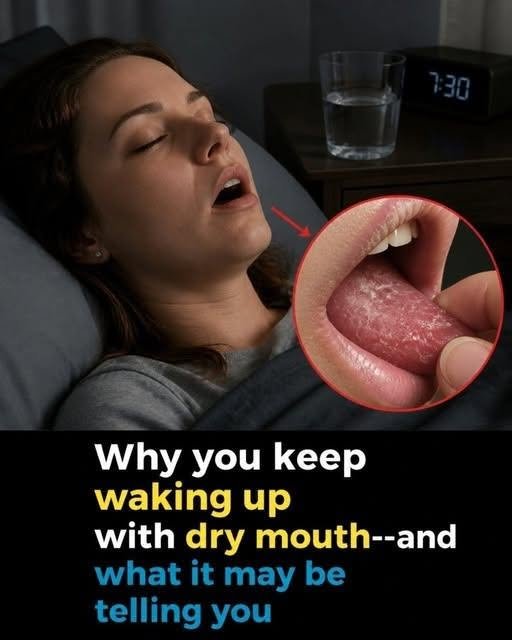
Waking up with a mouth that feels like the Sahara desert is an intensely uncomfortable way to start the morning. While viral wellness blogs love to attribute dry mouth to obscure nutritional deficiencies, dentists, otolaryngologists, and primary care physicians look at much more common mechanical and physiological causes.
Clinically known as xerostomia, waking up dry usually means your salivary glands slowed down their production overnight—or your airway forced a physical shift in how you breathe while you slept.
Common Reasons You Wake Up With Dry Mouth
When your mouth dries out overnight, it typically points to one of a few everyday culprits:
-
1. Mouth Breathing (The Number One Culprit):
-
Why it happens: If your nasal passages are blocked due to allergies, a deviated septum, a sinus infection, or mild sleep apnea, you naturally switch to breathing through your mouth all night. Constant airflow across your oral mucosa rapidly evaporates your saliva, leaving you parched by morning.
-
-
2. Medication Side Effects:
-
Why it happens: Hundreds of common prescription and over-the-counter medications—including antihistamines, decongestants, blood pressure pills, and antidepressants—have anticholinergic properties that explicitly suppress salivary gland output.
-
-
3. Late-Night Dehydration or Alcohol:
-
Why it happens: Not drinking enough water before bed, or consuming alcohol close to bedtime, leaves your overall fluid levels low. Furthermore, alcohol is a potent diuretic that dries out your entire system.
-
-
4. Natural Aging:
-
Why it happens: As we get older, our bodies naturally produce less saliva, making dry mouth more common in older adults (though medications usually play a major compounding role).
-
Why Waking Up Dry Matters (Beyond the Discomfort)
Saliva is not just moisture; it is your mouth’s primary defense system. It neutralizes acids, washes away food particles, and fights bacteria. Chronic dry mouth overnight increases your risk of:
-
Rapid tooth decay and gum disease (because saliva isn’t there to protect your enamel).
-
Persistent bad breath (halitosis) and cracked lips.
-
Difficulty swallowing or speaking comfortably first thing in the morning.
Simple Adjustments to Find Relief
If morning dry mouth is disrupting your sleep and comfort, a few straightforward strategies can help:
-
Hydrate and Humidify: Keep a glass of water by your bed, and consider using a cool-mist humidifier in your bedroom to add moisture back into the air you breathe.
-
Clear Your Airways: If nasal congestion is forcing you to breathe through your mouth, treating allergies or using saline nasal rinses before bed can help restore natural nasal breathing.
-
Review Your Meds: If you take daily medications and notice your mouth is constantly dry, talk to your doctor or pharmacist. They may be able to adjust your dosage or timing.
-
Avoid Evening Alcohol and Caffeine: Taper off drinks that dry out your system a few hours before turning in for the night.
💡 The Big Takeaway
Waking up with a dry mouth is usually your body’s way of telling you that you spent the night breathing through your mouth or that your hydration/medication routine needs a quick tweak. However, if it happens every single night despite drinking water and using a humidifier, it’s worth a quick clinical check to rule out underlying issues like sleep-disordered breathing.
Are you experiencing morning dry mouth alongside nasal congestion, or is it something you’ve recently started noticing?
