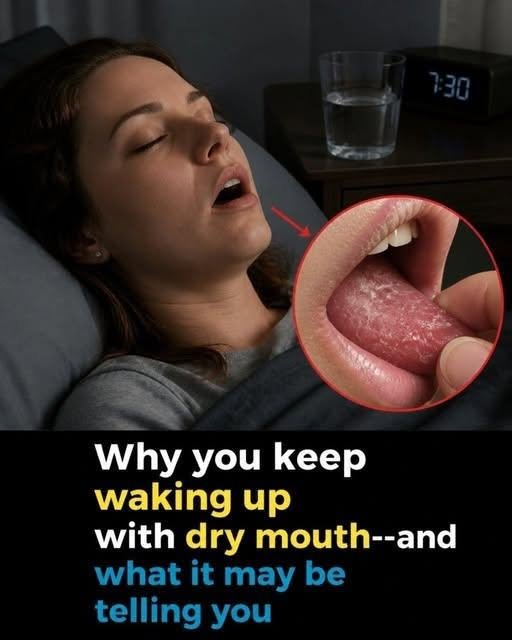
That classic wellness headline addresses a very common, frustrating morning wake-up call: peeling your tongue away from the roof of your mouth, feeling like you swallowed a desert overnight. While a parched throat is easy to blame on a warm bedroom or a stuffy nose, chronic morning dry mouth (xerostomia) is a direct biochemical and physiological signal from your body.
When your salivary glands slow down production while you sleep, your oral microbiome and mucosal tissues lose their primary defense system.
Here is what your body is actually trying to tell you when you wake up with a dry mouth:
What Morning Dry Mouth Can Indicate
-
Chronic Mouth Breathing (Airway Obstruction):
-
The Signal: If your nose is partially blocked due to allergies, a deviated septum, or sleep apnea, you naturally switch to breathing through your open mouth all night. The constant flow of air acts like a blow dryer over your delicate oral mucosa, evaporating every drop of saliva by morning.
-
-
Mild Dehydration or Electrolyte Imbalance:
-
The Signal: Saliva is roughly 99% water. If your total body hydration is running low, or if you consumed alcohol or heavy sodium close to bedtime, your salivary glands simply lack the raw fluid volume to keep producing saliva through the night.
-
-
Medication Side Effects:
-
The Signal: Hundreds of common medications—including antihistamines, blood pressure drugs, antidepressants, and anxiety medications—have anticholinergic properties. This means they block the chemical signals that tell your salivary glands to secrete moisture, leaving your mouth bone-dry by dawn.
-
-
Blood Sugar Imbalances (Early Metabolic Stress):
-
The Signal: When blood glucose levels run high, your kidneys pull extra water from your tissues to flush out excess sugar through urine. This systemic fluid shift rapidly dehydrates your mucous membranes, making chronic dry mouth an early warning sign worth monitoring.
-
-
Nighttime Stress or Sympathetic Overdrive:
-
The Signal: Your salivary glands are heavily controlled by your autonomic nervous system. When you are stressed, your body stays locked in sympathetic (“fight or flight”) mode, which naturally suppresses non-essential functions like digestion and saliva production.
-
The Bio-Hacker Salivary Protocol
Fixing morning dry mouth requires supporting your airway and moisture barriers before you sleep:
-
Nasal Breathing Support: Address nighttime nasal congestion with saline rinses or positioning to keep your mouth closed.
-
Hydrate with Electrolytes: Sip water balanced with electrolytes in the evening rather than slamming plain water right before bed (which just leads to midnight bathroom trips).
-
Review Your Cabinet: Check if any nightly medications or supplements are contributing to the anticholinergic dryness effect.
Do you notice dry mouth paired with stuffy breathing in the morning, or does it seem to happen out of nowhere?
