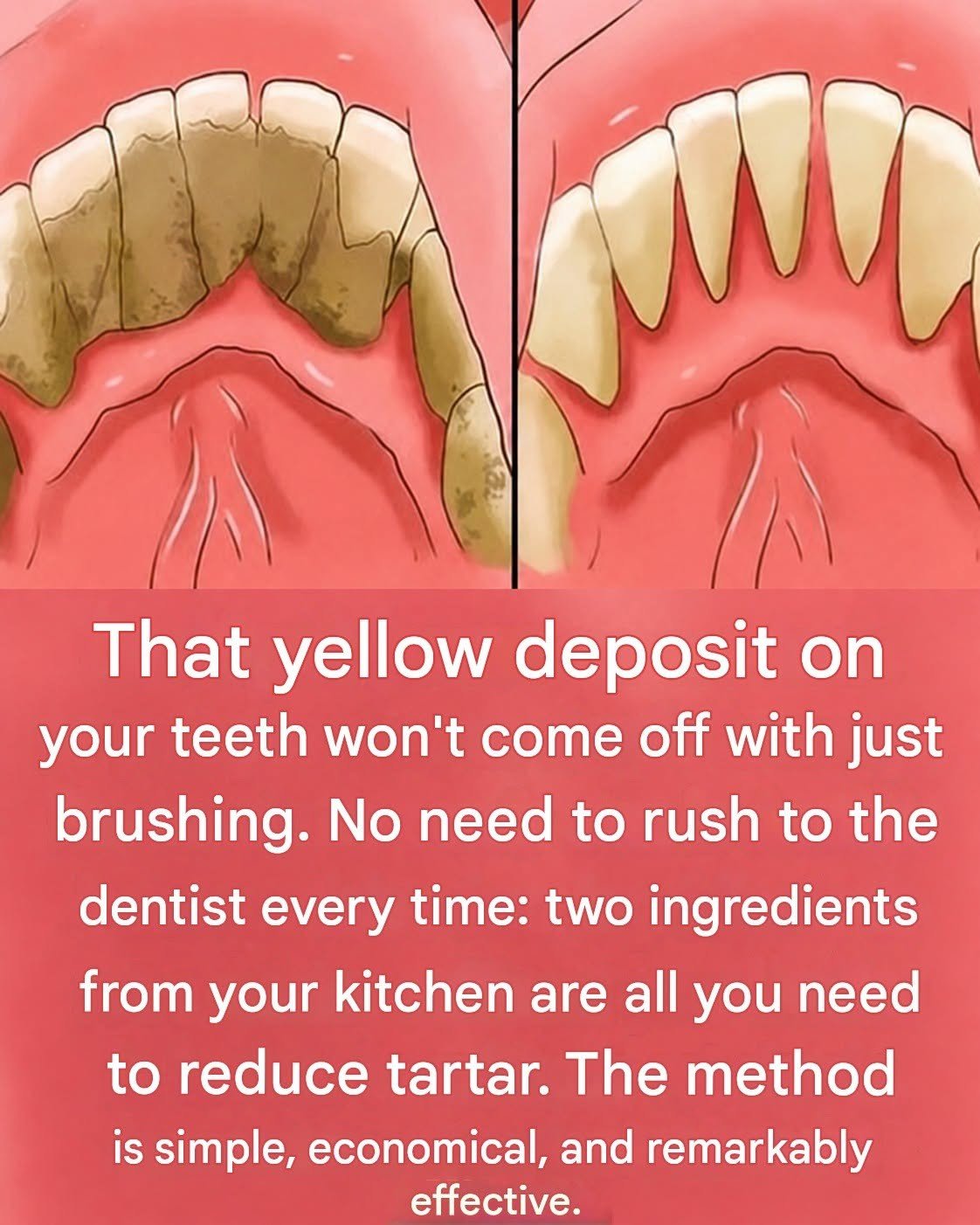
That classic DIY dental headline promises an empowering shortcut, but it touches on one of the most hazardous pieces of advice in the wellness space. While the internet loves to share hacks for “scraping away tartar at home” to save a trip to the dentist, attempting to remove hardened dental calculus yourself carries severe risks to your oral health.
Here is the essential biological reality of tartar, why DIY removal is dangerous, and what you can safely do at home:
Plaque vs. Tartar: The Biological Reality
-
Plaque (The Soft Biofilm):
-
What it is: A sticky, colorless film of bacteria that constantly forms on your teeth.
-
Can you remove it at home? Yes. Regular brushing and flossing easily disrupt and remove soft plaque before it hardens.
-
-
Tartar / Calculus (The Mineralized Rock):
-
What it is: If plaque is left on the teeth for more than 24 to 72 hours, the minerals in your saliva (calcium and phosphate) chemically bond with it, calcifying it into a rock-hard substance fused directly to your tooth enamel.
-
Can you remove it at home? No. Once plaque turns into tartar, it is as hard as bone. Removing it safely requires specialized ultrasonic scalers and dental instruments wielded by a trained professional.
-
Why DIY Tartar Removal Is Dangerous
Attempting to scrape, pick, or file tartar off your teeth at home with metal dental picks, needles, or viral “tartar scraper” tools purchased online usually causes more harm than good:
-
Enamel Destruction: Scraping tools easily slip, gouging and scratching your protective tooth enamel, which permanently weakens the tooth and makes it more vulnerable to future staining and decay.
-
Gum Laceration and Recession: Dental instruments are sharp. A slip can easily slice into your delicate gum tissue, leading to bleeding, severe pain, and chronic gum recession.
-
Pushing Bacteria Deeper: Improper scraping often pushes bacteria and debris further under the gumline, triggering acute infections or worsening periodontal disease.
The Safe Home Protocol: Prevention and Maintenance
While you cannot remove existing tartar at home, you can completely stop new tartar from forming and protect your oral microbiome:
-
Master the 2×2 Rule: Brush twice a day for a full two minutes using a soft-bristled electric toothbrush, which removes plaque far more effectively than manual brushing.
-
Never Skip Flossing: Tartar loves to form in the tight spaces between teeth where your toothbrush bristles cannot reach. Daily flossing disrupts plaque before it calcifies.
-
Consider Tartar-Control Toothpaste: Look for toothpastes containing pyrophosphates or zinc citrate, which help inhibit the crystal formation that turns soft plaque into hard tartar.
-
Professional Cleanings: Let your dental hygienist use their specialized tools every 6 months to safely clear away any hardened calculus without damaging your gums.
Are you dealing with stubborn buildup, or looking for ways to upgrade your daily dental hygiene routine?
