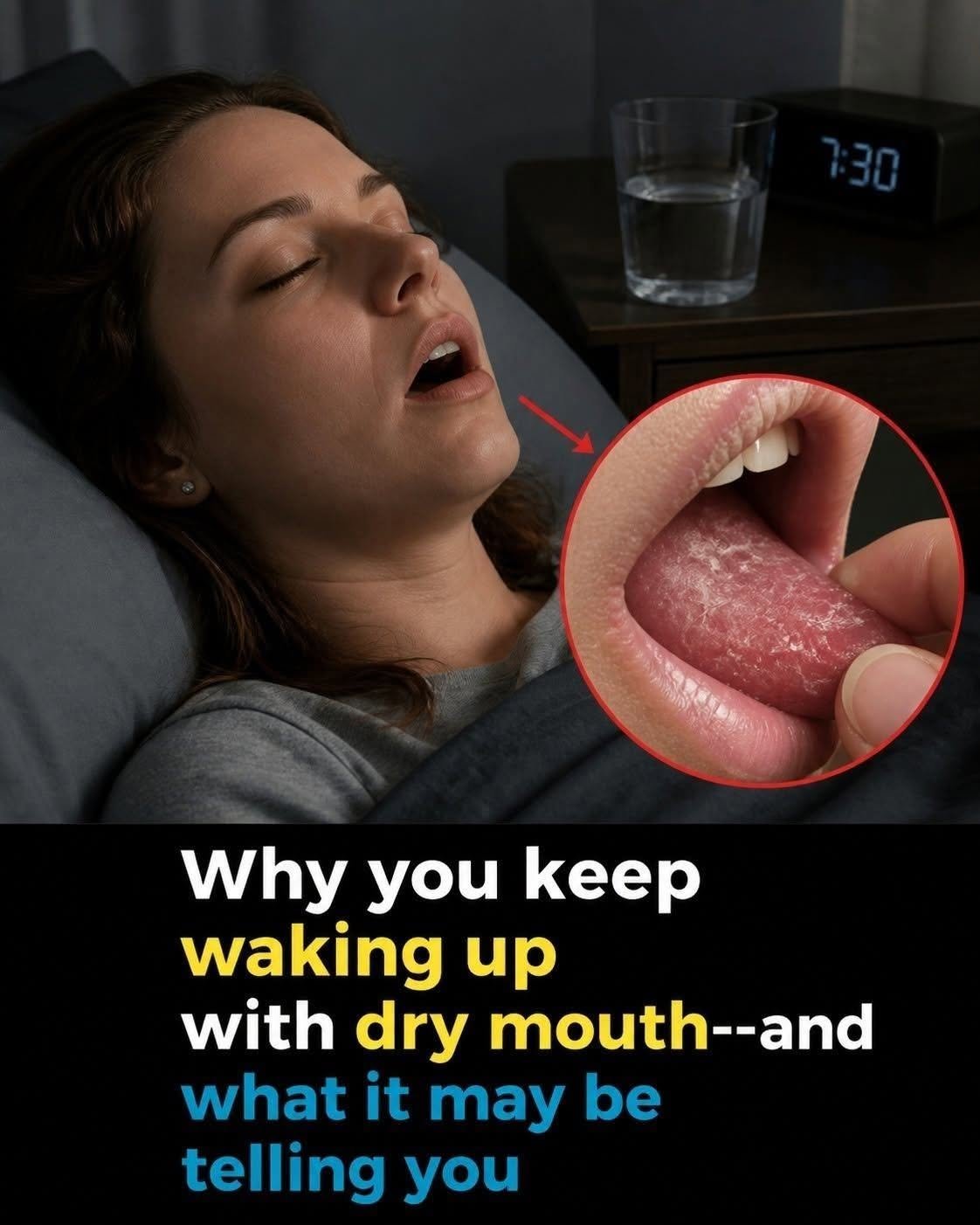
That classic health headline taps into a very common, yet frequently dismissed, morning annoyance. Waking up with your tongue stuck to the roof of your mouth and a parched throat is easy to brush off as a minor inconvenience—perhaps you slept with your mouth open, or your bedroom was too warm.
However, when chronic morning dry mouth (xerostomia) becomes a regular fixture of your mornings, your body is often sending you important physiological signals about your hydration status, breathing habits, or underlying health.
Here is what your body is actually telling you when you wake up parched, explained through a clinical and biological lens:
What Your Body Is Communicating Through Morning Dry Mouth
-
Chronic Mouth Breathing During Sleep:
-
The Signal: If you wake up with a dry mouth and a sore throat, you likely spent hours breathing through your mouth rather than your nose. This can be caused by nasal congestion, allergies, a deviated septum, or even mild sleep apnea. When air flows continuously across your oral mucosa overnight, it rapidly evaporates the thin layer of saliva that normally protects your mouth.
-
-
Dehydration or Electrolyte Imbalance:
-
The Signal: As we touched on with overnight hydration shifts, your body loses fluid continuously through respiration while you sleep. If your overall daily fluid intake is low, or if you consumed alcohol or salty foods close to bedtime, your blood volume dips, your salivary glands slow down production, and your mouth sounds the alarm.
-
-
Medication Side Effects:
-
The Signal: Hundreds of common prescription and over-the-counter medications—including antihistamines, blood pressure medications, antidepressants, and diuretics—list dry mouth as a primary side effect. They do this by blocking acetylcholine, a neurotransmitter that signals your salivary glands to produce fluid. If you started a new medication recently, your morning dry mouth might be a direct chemical culprit.
-
-
Blood Sugar Fluctuations (Metabolic Warning):
-
The Signal: Persistent dry mouth is a classic early indicator of elevated blood sugar or uncontrolled diabetes. When excess glucose builds up in your bloodstream, your kidneys pull water from your tissues to flush it out, leading to systemic dehydration and a chronically dry, parched oral cavity.
-
-
Autonomic Nervous System Stress or Sleep Disruption:
-
The Signal: Saliva production is regulated by your autonomic nervous system. When you experience high stress, anxiety, or fragmented sleep cycles that keep you in a state of light, hyper-vigilant sleep, your sympathetic (“fight-or-flight”) nervous system dominates over your parasympathetic system. Salivary flow naturally drops dramatically when your body is under stress.
-
Why Saliva Matters More Than You Think
Saliva isn’t just water; it is a complex biological fluid packed with minerals (like calcium and phosphate) that remineralize your enamel, enzymes that begin digestion, and antibodies that fight off oral bacteria. When your mouth stays dry for hours overnight, you lose that protective shield, leaving your teeth significantly more vulnerable to decay and gum irritation.
If morning dry mouth is an occasional thing after a salty dinner, it’s harmless. But if it happens day after day, it’s worth investigating—whether that means checking your bedroom humidity, reviewing your medications, or keeping a glass of water right by your bed.
Have you been noticing a parched mouth regularly in the mornings, or are you tracking other subtle health signals lately?
