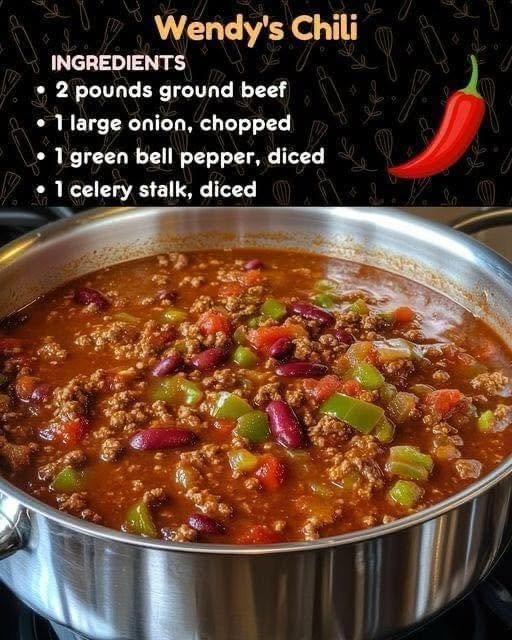
That headline (or food craving!) is another refreshing break from medical alarmism. Instead of a secret health doom-clock or a terrifying DIY dental disaster, we’re talking about one of fast food’s most famous comfort-food staples: Wendy’s chili.
Unlike most fast-food items that are hastily thrown together, Wendy’s chili actually has a fascinating origin story rooted in food waste reduction, and it remains one of the more unique items on a drive-thru menu.
Here is the un-sensationalized reality behind how Wendy’s chili came to be and what makes it tick:
1. The Surprising Origin: Built on Zero Waste
Wendy’s founder, Dave Thomas, didn’t invent the chili just to have another menu item—it was born out of practicality:
-
Rescuing Hamburgers: Back when Wendy’s first started, hamburgers that didn’t sell within a specific timeframe couldn’t be served as fresh patties anymore. Instead of throwing that perfectly good, cooked beef in the trash, Dave Thomas (who loved his mother’s home-style cooking) decided to chop it up, freeze it, and repurpose it into a hearty, slow-simmered beef chili.
-
The Tradition Continues: While modern supply chains and automated cooking mean today’s chili isn’t just relying on “leftover” patties in the exact same way, the foundational recipe still honors that original, zero-waste kitchen logic.
2. What Is Actually in It?
Contrary to internet urban legends claiming the chili is made from mysterious meat scraps, the ingredient list is surprisingly straightforward and close to what you’d make at home:
-
The Base: Ground beef (pre-cooked and chopped), chili beans, kidney beans, and a tomato-based broth.
-
The Veggies: Diced onions, celery, and green bell peppers.
-
The Spice: A distinct chili seasoning blend that gives it that signature mild, savory kick.
3. The Nutritional Reality
While it’s marketed as a “lighter” or cozier alternative to french fries, it’s still fast food, meaning it comes with a few nutritional trade-offs:
-
Protein and Fiber: Because it’s packed with beef and beans, a cup or bowl delivers a surprisingly solid amount of protein and dietary fiber, which makes it more filling than standard fast-food sides.
-
The Sodium Catch: Like almost all restaurant soups and chilis, sodium content is quite high. If you’re managing your blood pressure or cardiovascular health, it’s a treat to enjoy mindfully rather than a daily staple.
The Takeaway: No medical warnings or secret health hacks here—just a comforting bowl of fast-food history born from a smart kitchen-waste workaround.
Did a craving hit you on a chilly day, or were you looking up the secret behind how they make it taste so distinct?
