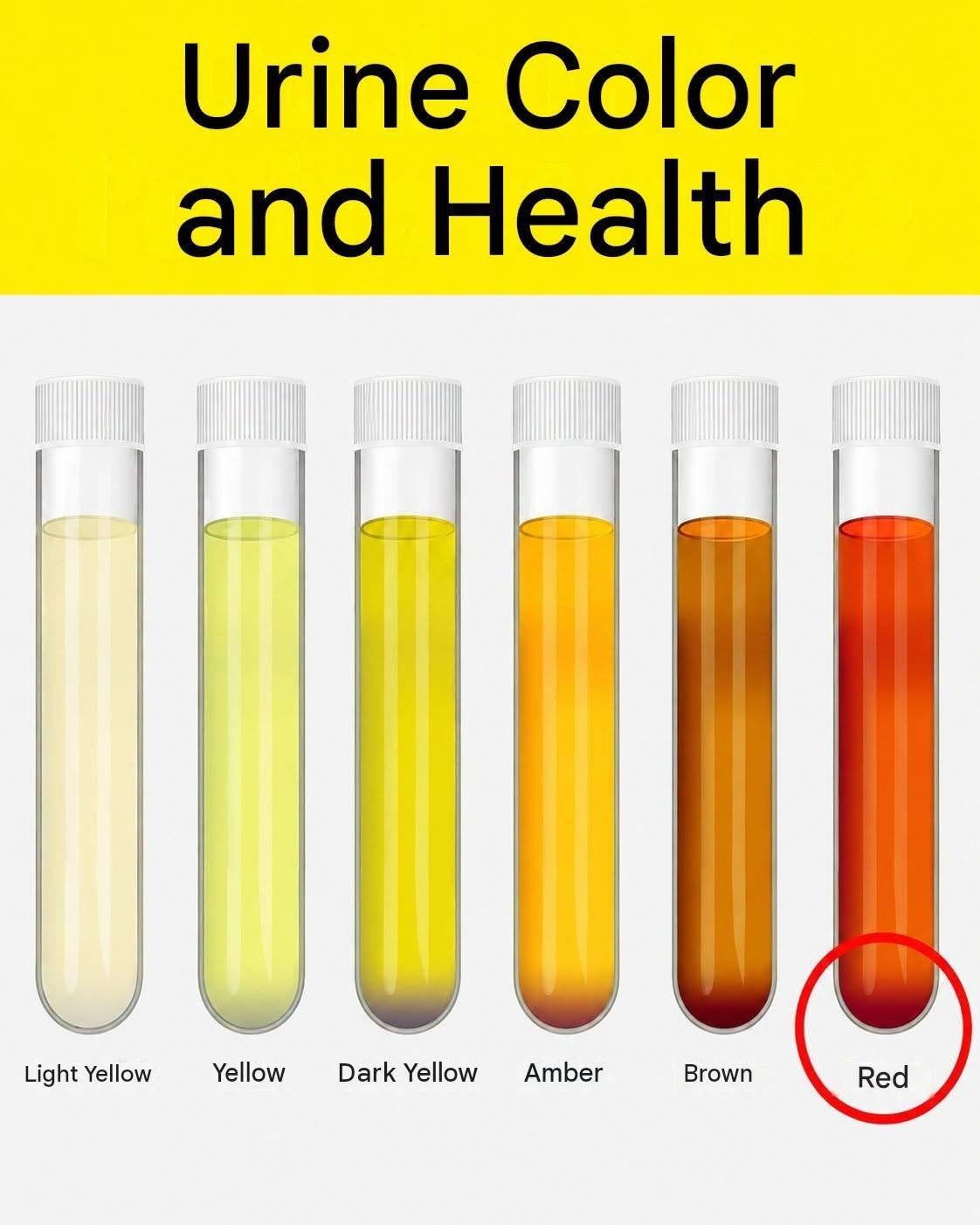
That headline is a classic example of turning a completely normal, everyday bodily function into a diagnostic mystery show. While viral health articles love to present your urine color as a mystical decoder ring for hidden diseases, clinical medicine approaches it with a bit more common sense.
Your urine color is primarily a reflection of two things: **hydration status** and **urobilin** (a yellow pigment created when your body breaks down old red blood cells).
Here is the grounded, clinical reality behind what your urine color actually tells you—and when it matters:
### 1. The Hydration Spectrum: Pale Yellow to Clear
* **The Gold Standard:** A pale straw or transparent yellow color is the hallmark of good hydration. It means your kidneys are doing their job of balancing your body’s fluid levels and excreting waste efficiently.
* **Dark Amber or Honey:** This usually means you’re simply dehydrated. When fluid intake drops, your kidneys concentrate your urine to conserve water, making the pigment much more concentrated. A tall glass of water usually fixes this instantly.
### 2. When Color is Driven by Food and Meds (The False Alarms)
Clickbait articles love to panic people over unusual urine colors, ignoring how heavily diet and medications influence what you see in the toilet bowl:
* **Bright Neon Yellow:** Often caused by taking multivitamins or B-complex supplements. Your body simply flushes out the excess water-soluble vitamins it doesn’t need, turning your urine a striking yellow-green. Completely harmless!
* **Red or Pink:** This is the one that triggers the most panic, but before assuming the worst, think about your plate. Did you eat beets, blackberries, or rhubarb recently? On the medication side, drugs like rifampin or even standard laxatives can tint urine reddish-pink.
* **Brown or Cola-Colored:** Can be caused by certain beans, fava beans, or medications, though persistent dark brown urine paired with pale stools can sometimes warrant a chat with a doctor about liver function.
### 3. When to Actually Pay Attention (The Clinical Red Flags)
Doctors don’t diagnose systemic disease from a single funny-colored bathroom trip, but they do look at persistent patterns:
* **Gross Hematuria (Visible Blood):** If your urine looks genuinely pink, red, or smoky brown and you *haven’t* eaten beets or heavy pigments, it indicates blood in the urine. This requires a professional evaluation to rule out urinary tract infections, kidney stones, or bladder issues.
* **Foamy Urine:** If your urine looks consistently like beer foam, it can sometimes indicate protein leaking through the kidneys (proteinuria), which a simple routine urinalysis can check.
—
> **The Takeaway:** Your urine color is a quick snapshot of your hydration and what you had for lunch—not a crystal ball predicting organ failure. Drink your water, and don’t let a rainbow-colored chart in an online article stress you out.
Did this urine color guide pop up because you noticed a weird shade after a morning vitamin, or is your internet feed just determined to make you overanalyze every trip to the bathroom?
