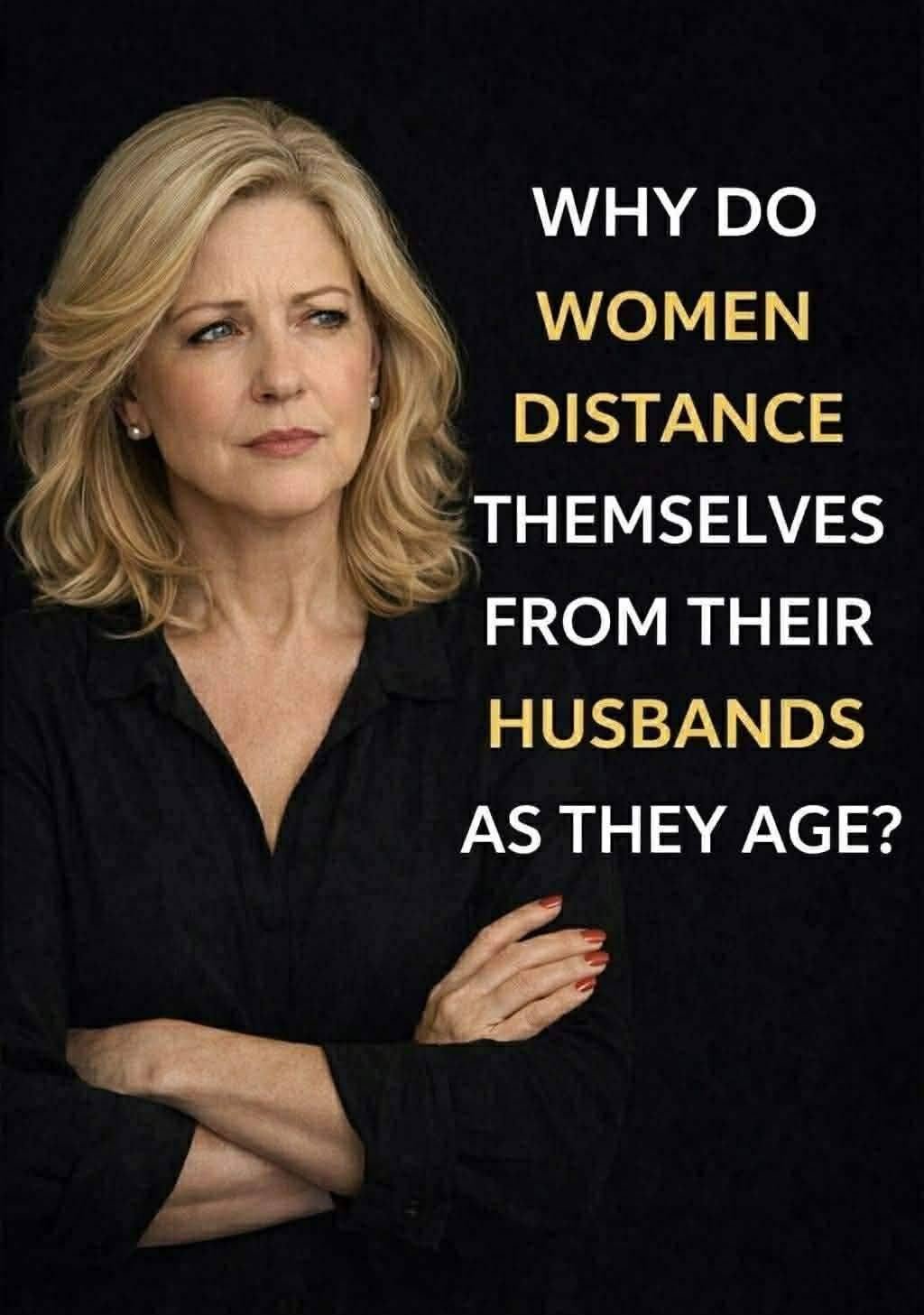
That question touches on a profound and complex shift that many couples experience as they move into later life. When a long-term marriage hits the empty-nest years or retirement, the sudden proximity—or conversely, drifting emotional goals—can prompt women to step back, establish boundaries, or seek distance from their husbands.
Rather than a sudden, unprovoked change, this distancing is usually the cumulative result of changing roles, evolving psychological needs, and lifelong relationship dynamics that come to a head in later life.
From a psychological and sociological standpoint, here is why this dynamic frequently unfolds as couples age:
The Drivers of Emotional and Physical Distance in Later Life
-
The Exhaustion of the “Emotional Labor” Gap:
-
The Dynamic: For decades, many women carry the invisible load of a household—managing schedules, anticipating family needs, smoothing over conflicts, and coordinating social connections. When children leave and work slows down, women often look at the next chapter of life and realize they are exhausted. Stepping back is frequently an unconscious or conscious rebellion against continuing to manage another adult’s emotional life.
-
-
Post-Retirement Friction (The “Two Under One Roof” Shock):
-
The Dynamic: Retirement can be a severe shock to a long-standing routine. A husband who was out of the house for 10 to 12 hours a day is suddenly home full-time, looking to his wife for companionship, validation, and structure. If she has spent decades carving out an autonomous daily routine, having her personal space invaded can feel suffocating, leading her to create physical and emotional distance.
-
-
Midlife and Post-Menopausal Psychological Shifts:
-
The Psychology: Hormonal changes and the psychological transition into the second half of life often trigger a powerful shift in women’s priorities. Societal conditioning tells women to be agreeable caretakers, but post-menopausal women frequently experience a surge in assertiveness, a lower tolerance for superficiality or friction, and a fierce desire to spend their remaining years doing what they want to do. If a marriage has underlying friction, this developmental shift strips away the patience to “keep the peace.”
-
-
Divergent Aging and Social Needs:
-
The Social Reality: Statistically, older women tend to cultivate rich, supportive female friendships and community ties that provide deep emotional intimacy. If a husband relies exclusively on his wife as his sole confidant and social outlet, it creates an intense imbalance. The wife may pull away because the relationship feels like a demanding caretaking role rather than a mutual partnership.
-
-
Resentments That Have Quietly Accumulated:
-
The History: Small, unaddressed grievances from decades of raising children, balancing careers, and navigating unequal domestic labor do not disappear; they often harden. When the frantic pace of the busy parenting years slows down, those historical cracks in the foundation of the marriage become much harder to ignore.
-
The Takeaway
When a woman distances herself from her husband as they age, it is rarely about wanting to blow up her life—it is usually an attempt to reclaim her autonomy, protect her peace, and find a sense of self that may have been sidelined for decades.
Are you reflecting on shifting relationship dynamics in your own life, or observing these kinds of changes in couples around you?
